
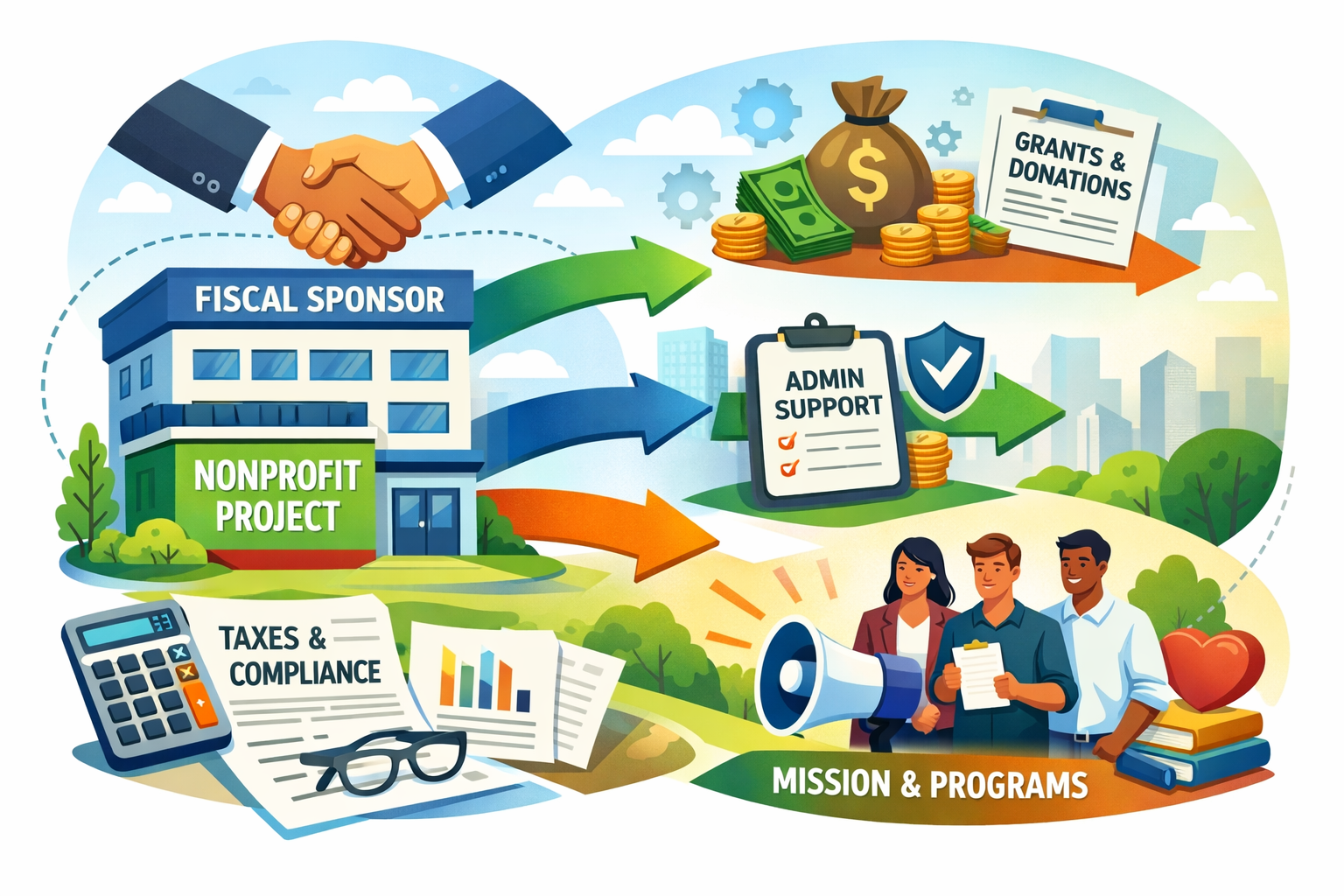
Many ministries, churches, and community initiatives begin with a powerful vision: feed the hungry, mentor youth, launch discipleship programs, or serve vulnerable communities.
But once the mission is clear, the next question often becomes complicated:
How do we legally receive donations and grants without starting a full nonprofit?
This is where fiscal sponsorship becomes an attractive option. Unfortunately, many leaders quickly encounter a new challenge—confusion about which sponsorship model to choose.
Two models dominate the conversation:
- Comprehensive fiscal sponsorship
- Pre-approved grant relationship sponsorship
Understanding the legal structures, donor expectations, and operational implications of each model is critical. Choosing the wrong structure can create compliance risks, donor distrust, or operational bottlenecks.
This guide explains how fiscal sponsorship works and helps you determine which model best fits your ministry or community project.
Also Read: Fiscal Sponsorship vs. Starting a Nonprofit: What’s Faster for Raising Funds?
What Is Fiscal Sponsorship?
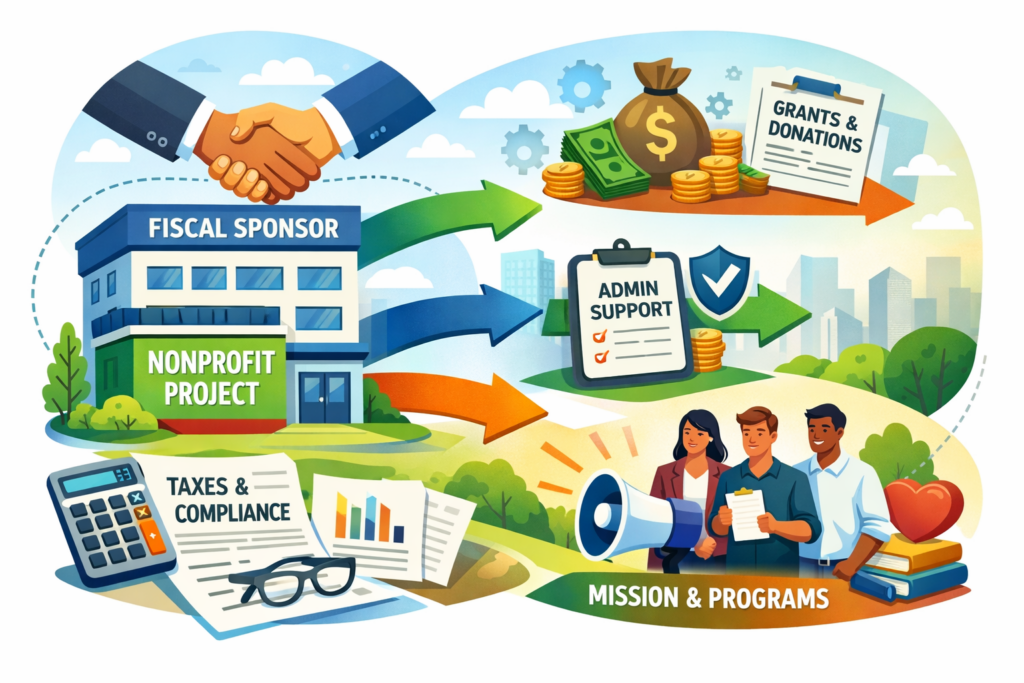
Fiscal sponsorship is a legal arrangement where an established 501(c)(3) nonprofit organization agrees to receive and manage funds on behalf of a project that does not yet have its own tax-exempt status.
This allows emerging ministries and projects to:
- Receive tax-deductible donations
- Apply for grants
- Operate under an existing nonprofit’s legal and financial infrastructure
Instead of spending months (or years) establishing a new nonprofit, projects can begin serving their communities immediately.
However, not all fiscal sponsorships operate the same way.
The Two Most Common Fiscal Sponsorship Models
While several structures exist, most ministries encounter two primary options.
1. Comprehensive Fiscal Sponsorship (Model A)
Comprehensive fiscal sponsorship means the project becomes legally part of the sponsoring nonprofit.
In this model:
- The sponsor owns and oversees the project
- Staff may be employees of the sponsor
- All finances flow through the sponsor’s accounting system
- The sponsor assumes legal responsibility and compliance
The project operates as a program under the sponsor’s umbrella, not as an independent entity.
Advantages of Comprehensive Sponsorship
This structure offers significant benefits, particularly for early-stage initiatives.
1. Full Administrative Support
Sponsors often provide:
- Accounting and financial management
- HR and payroll
- Legal compliance
- Insurance coverage
- Donation processing
This allows project leaders to focus on mission delivery rather than administration.
2. Greater Credibility With Funders
Because the project is legally part of an established nonprofit, donors and foundations often feel more confident supporting it.
3. Reduced Compliance Risk
The sponsor ensures compliance with IRS regulations, reporting requirements, and financial oversight.
Potential Drawbacks
However, comprehensive sponsorship also requires relinquishing a degree of control.
The sponsor typically has authority over:
- Financial decisions
- Hiring structures
- Strategic oversight
For founders who want full independence, this can feel restrictive.
2. Pre-Approved Grant Relationship (Model C)

In a pre-approved grant relationship, the sponsored project remains legally independent, but the fiscal sponsor agrees to receive grants on its behalf.
Instead of becoming part of the nonprofit, the project is treated more like a grant recipient.
Here’s how it works:
- A donor or foundation provides funds to the fiscal sponsor.
- The sponsor reviews the project to ensure it aligns with charitable purposes.
- The sponsor then regrants the funds to the project.
The sponsor maintains oversight responsibility but does not fully control the project.
Advantages of the Pre-Approved Model
This structure appeals to projects that want more independence.
1. Operational Autonomy
Project leaders maintain control over:
- Strategy
- Staffing
- Program design
- Operations
2. Flexibility
The project can continue developing its own brand and infrastructure.
3. Transitional Structure
Many projects use this model while preparing to launch their own nonprofit.
Potential Drawbacks
This model comes with stricter expectations.
Sponsors must demonstrate to the IRS that:
- Funds are used for charitable purposes
- The project is properly monitored
- Grants are not simply being “passed through”
As a result, sponsors often require:
- Detailed reporting
- Formal agreements
- Strong financial accountability
Some foundations may also prefer the comprehensive model, which offers stronger oversight.
Legal Structures Behind Fiscal Sponsorship

Understanding the legal implications of each model helps leaders avoid costly mistakes.
Comprehensive Model
Under the comprehensive model:
- The project has no separate legal identity
- All assets belong to the sponsoring nonprofit
- The sponsor assumes full liability
From the IRS perspective, the project is simply one program within the nonprofit organization.
This structure is the most widely accepted and least risky from a compliance standpoint.
Pre-Approved Grant Model
In contrast, the pre-approved grant model treats the project as a separate entity.
The fiscal sponsor must demonstrate:
- Independent evaluation of the project
- Ongoing monitoring
- Proper charitable use of funds
Failure to maintain oversight can create IRS compliance issues.
Because of this, many sponsors impose stricter governance requirements.
How Funders View Fiscal Sponsorship
Donors and foundations often evaluate sponsored projects differently depending on the structure used.
What Funders Look For
Funders typically assess:
- Financial transparency
- Governance structure
- Legal accountability
- Program sustainability
The comprehensive model often provides stronger signals in these areas because the sponsor directly manages the project.
However, experienced foundations are also comfortable with the pre-approved model when the sponsor has strong oversight systems.
Communication Matters
Regardless of structure, transparency is critical.
Projects should clearly explain:
- Their fiscal sponsorship arrangement
- The role of the sponsor
- How funds are managed
Clear communication builds trust with donors and grantmakers.

When Comprehensive Sponsorship Is the Better Choice
Comprehensive sponsorship is often ideal when:
- The project is very early stage
- Leadership lacks administrative infrastructure
- Significant grant funding is expected
- The founders want operational support
Many community initiatives begin under this structure while validating their impact and building donor relationships.
When the Pre-Approved Model Makes More Sense
The pre-approved grant relationship may be better when:
- The project already has strong leadership and systems
- Independence is important to the founders
- The initiative plans to become its own nonprofit soon
- The sponsor prefers a lighter administrative role
This model often works well for established grassroots initiatives that simply need a temporary funding pathway.
Choosing the Right Model for Your Ministry or Project
Before selecting a fiscal sponsorship structure, leaders should evaluate several key questions.
1. How much administrative support do we need?
Projects that need help with accounting, payroll, and compliance usually benefit from comprehensive sponsorship.
2. How important is independence?
If maintaining full control is critical, the pre-approved model may be a better fit.
3. What do potential funders expect?
Some foundations prefer the stronger oversight provided by comprehensive sponsorship.
4. Are we planning to become our own nonprofit later?
If so, a pre-approved relationship can serve as a transitional solution.
Understanding the differences
Fiscal sponsorship can unlock powerful opportunities for ministries and community projects that want to start making an impact quickly.
But choosing the wrong structure can lead to governance confusion, donor concerns, and compliance headaches.
Understanding the differences between comprehensive fiscal sponsorship and pre-approved grant relationships helps leaders make informed decisions that protect both their mission and their supporters.
With the right structure in place, your project can focus on what matters most—serving communities and advancing meaningful change.
If you’re exploring fiscal sponsorship as a pathway to launch or scale your project, having the right documentation in place can make all the difference—from building donor trust to ensuring compliance and financial clarity.
To support your journey, you can access a collection of practical, ready-to-use resources: download a free Grant Proposal Template for Fiscally Sponsored Projects and a Fiscal Sponsorship Agreement Template , or streamline your entire workflow with the Fiscal Sponsorship Bundle (9 templates) for just $5.99, which includes everything from budgets and narratives to reporting tools and funder communication templates.
You can also explore individual templates like:
Donor Progress Report Template to strengthen each aspect of your fiscally sponsored project.
FAQs
1. What is fiscal sponsorship in simple terms?
Fiscal sponsorship allows a project to operate under the tax-exempt status of an established nonprofit so it can legally receive tax-deductible donations.
2. What is the difference between comprehensive and pre-approved fiscal sponsorship?
Comprehensive sponsorship makes the project part of the sponsor organization, while the pre-approved model allows the project to remain independent.
3. Can a ministry operate under fiscal sponsorship?
Yes. Many ministries use fiscal sponsorship to receive donations and grants while building their programs.
4. Is fiscal sponsorship the same as starting a nonprofit?
No. Fiscal sponsorship allows projects to operate under another nonprofit’s status instead of forming a new organization.
5. Do fiscal sponsors charge fees?
Yes. Most sponsors charge administrative fees, typically ranging from 5% to 15% of funds raised.
6. Can a project leave a fiscal sponsor later?
Yes. Many projects transition out of fiscal sponsorship once they establish their own nonprofit status.
7. Do donors trust fiscally sponsored projects?
Yes, especially when the sponsor is reputable and the relationship is clearly communicated.
8. Are grants available to fiscally sponsored projects?
Many foundations allow fiscally sponsored projects to apply for grants through their sponsoring organization.
9. How long can a project stay under fiscal sponsorship?
Some projects remain sponsored for years, while others transition to independent nonprofits after a few years.
10. What should I look for in a fiscal sponsor?
Look for organizations with strong compliance systems, financial transparency, clear agreements, and experience supporting projects similar to yours.