

How to Craft a Social Media Calendar That Boosts Funding
Why inconsistent posting quietly hurts nonprofit funding
Inconsistent posting is not just a visibility problem. It is a trust problem. When a nonprofit disappears from social feeds for days or weeks, then suddenly posts a fundraising appeal, supporters often feel disconnected from the mission. They may not remember the latest impact story, the urgency behind the need, or the reason your work matters right now. That gap weakens response.
A strong social media calendar helps solve that problem by replacing random posting with a planned rhythm. Instead of posting only when there is an event, emergency, or campaign deadline, your organization creates a reliable presence. That consistency builds familiarity. Familiarity builds trust. And trust is one of the most important drivers of online giving.
Many nonprofit teams struggle here because social media is often handled reactively. One person posts when they have time. Another person shares an event flyer at the last minute. A fundraiser asks for a donation post on short notice. Over time, the feed becomes disconnected, repetitive, or silent. The audience sees scattered messages instead of a clear story.
That is why a social media calendar matters so much. It turns your content from a last-minute task into a funding asset. It helps you align mission stories, donor education, campaign promotion, gratitude content, and community engagement into one organized system. When that system works, your audience sees a steady, compelling journey rather than isolated asks.
What a social media calendar actually does for fundraising
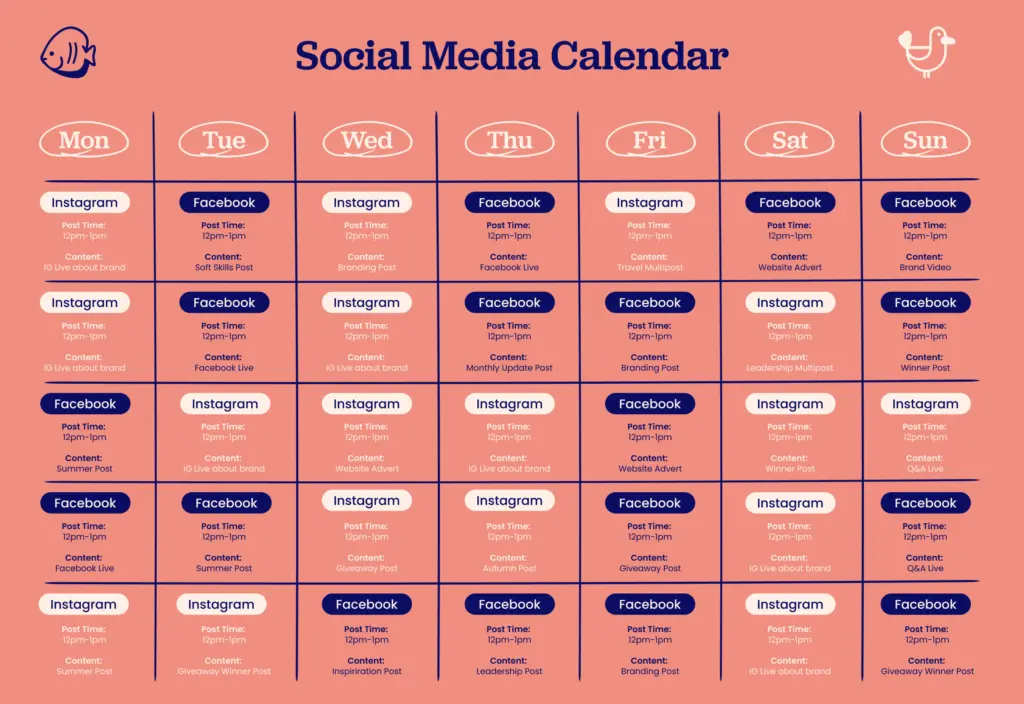
A social media calendar is more than a spreadsheet filled with posting dates. It is a strategy document that maps what you will say, when you will say it, where you will publish it, and why each post matters. For nonprofits, that “why” must always connect back to relationships, trust, and funding readiness.
When used well, a social media calendar helps you do four important things. First, it ensures consistency. Second, it balances your content so you are not asking for money in every post. Third, it creates space for storytelling that leads naturally into donations. Fourth, it gives your team a repeatable structure that reduces stress.
Supporters rarely give because they saw one donation post in isolation. They give because they have seen your organization show up consistently. They have learned what you do. They have seen proof of impact. They have heard real stories. They have watched your team stay active, credible, and mission-focused. A social media calendar supports all of that.
Start with your funding goal, not your posting schedule
A common mistake is building a social media calendar around dates without first deciding what the content should help accomplish. If the goal is simply “post three times a week,” the result may be activity without progress. For a nonprofit, content should connect to a funding outcome.
Before creating your calendar, define the result you want social media to support over the next three months. That result could be increasing monthly donors, boosting event registrations, growing an email list, improving campaign readiness, or strengthening donor retention. Your social media calendar should be designed around that goal.
For example, if your organization wants to increase year-end donations, your calendar should not begin in December with direct asks alone. It should begin earlier with impact stories, beneficiary voices, volunteer moments, behind-the-scenes content, and educational posts that show the problem your nonprofit is solving. That way, when the appeal arrives, the audience already understands the need and feels emotionally invested.
A funding-focused social media calendar answers questions like these: What do donors need to understand before they are ready to give? What kind of content creates emotional connection? Which proof points strengthen credibility? When should we promote, educate, celebrate, or invite action? Those answers shape a far stronger plan than simply choosing random posting dates.
The five content pillars every nonprofit calendar needs

An effective social media calendar usually becomes easier to manage when content is organized into pillars. Content pillars are recurring categories that keep your message balanced and intentional. Without them, many nonprofit feeds become overloaded with event flyers, donation requests, or generic awareness posts.
1. Impact stories
These posts show the real-world difference your mission is making. They might feature a participant story, a program milestone, a before-and-after outcome, or a short narrative from the field. Impact stories help donors see results, not just requests.
2. Educational content
Educational posts explain the issue your organization addresses. They help your audience understand the problem, the context, and the urgency. This content makes fundraising appeals more meaningful because people can see why the cause deserves support.
3. Community and credibility
This pillar includes volunteer highlights, team introductions, partner recognition, media mentions, testimonials, and snapshots of your day-to-day work. These posts humanize your nonprofit and strengthen confidence in your leadership.
4. Engagement content
Questions, polls, myth-busting posts, awareness moments, and conversation starters keep your audience involved. A good social media calendar does not only broadcast information. It invites participation.
5. Fundraising and conversion posts
These are direct appeals, campaign posts, event invitations, recurring donor pushes, and giving reminders. They matter, but they work best when supported by all the other pillars above. A social media calendar makes sure these asks are not appearing in isolation.
How often should a nonprofit post?
There is no universal posting number that guarantees donations. The right cadence depends on your team capacity, audience behavior, and platforms. What matters most is that your social media calendar reflects a pace your organization can sustain with quality.
For many nonprofits, a realistic starting point is three to five posts per week across one or two main platforms. That is usually enough to maintain visibility and create momentum without overwhelming a small team. If your organization has limited capacity, consistency with fewer strong posts is much better than ambitious frequency followed by silence.
Your social media calendar should also include flexibility. Some weeks may include a live event, awareness day, fundraising campaign, or urgent need. Other weeks may be quieter. The goal is not robotic posting. The goal is a dependable presence with enough variety to keep the audience engaged.
Build a monthly calendar before you build a daily one

A practical way to create a social media calendar is to work from the month down to the week, and then from the week down to each post. This prevents random content planning and makes sure major funding moments are supported properly.
Start by mapping the month. Identify important campaign dates, awareness days, events, seasonal fundraising opportunities, deadlines, and organizational milestones. Then layer in your content pillars. Decide which weeks will emphasize storytelling, education, engagement, or direct fundraising.
Once your monthly themes are clear, build your weekly flow. For example, one week might include an impact story on Monday, an educational carousel on Wednesday, a donor testimonial on Friday, and a light fundraising invitation on Sunday. Another week may revolve around an event countdown or a campaign launch.
This is where a social media calendar becomes especially useful. Instead of asking, “What should we post today?” your team already knows the purpose of the week and the role of each post. That reduces decision fatigue and improves quality.
A simple weekly posting framework that boosts funding
Many nonprofits need structure more than complexity. Here is a simple pattern that can guide your social media calendar each week.
Monday: Mission and impact
Start the week with a story that reminds your audience why your work matters. Share a beneficiary quote, a milestone, or a short transformation story. This sets the emotional tone.
Wednesday: Education and context
Use the middle of the week to explain the issue. Teach your audience something important. Clarify the need your nonprofit addresses. Strong donor behavior often begins with strong understanding.
Friday: Human connection
Feature a volunteer, staff member, donor, or partner. Show the people behind the mission. Trust grows when audiences see the human side of the organization.
Sunday: Invitation to act
End the week with a soft or direct invitation. That could be a donation ask, newsletter sign-up, event registration, or a reminder about a current campaign. Because the audience has already seen impact, education, and human connection during the week, the ask feels far more natural.
A social media calendar built on this kind of rhythm creates momentum. It also keeps you from over-posting appeals while still moving people toward funding actions.
How to write posts that feel consistent without sounding repetitive
One fear nonprofit teams often have is that a structured social media calendar will make content feel boring. In reality, the opposite is usually true. Structure gives you the freedom to be creative because you are no longer improvising under pressure.
Consistency does not mean repeating the same message word for word. It means repeating the same mission in different formats and angles. One week you may tell a program story through a quote graphic. The next week you may show similar impact through a short video. Later you may present the same issue through a data point, a volunteer reflection, or a founder insight.
Your social media calendar should vary format while keeping message alignment. Rotate between testimonials, photos, reels, carousels, graphics, captions, simple videos, and campaign updates. That way the audience experiences continuity without monotony.
The role of storytelling in a funding-focused calendar
A social media calendar that boosts funding must be built around stories, not announcements. Facts matter. Statistics matter. But stories move people emotionally. Stories help donors remember, care, and respond.
Not every story needs to be dramatic. Small stories work too. A volunteer arriving early to set up. A child receiving materials for the first time. A family sharing what changed after joining your program. A staff member explaining why this work matters. These moments create emotional texture.
The key is sequence. A social media calendar lets you tell stories over time. One post introduces the need. Another shows the people involved. Another highlights the response. Another reveals the outcome. Then, when you ask for support, the audience has followed the journey. That is far more powerful than a standalone appeal.
Common mistakes that weaken a social media calendar

Even a well-intentioned social media calendar can underperform if the strategy is off. One mistake is overloading the calendar with promotional posts. If every other post asks for donations, audiences tune out. Another mistake is posting without a clear audience in mind. Content should speak to real supporters, not to an internal committee.
A third mistake is creating a calendar once and never reviewing it. Your social media calendar should be a living tool. Track what gets saves, shares, comments, clicks, and donations. Notice which stories resonate. Adjust future content accordingly.
Another common mistake is ignoring repurposing. Nonprofits often create one strong story and use it once. A smarter social media calendar stretches good content into multiple formats. One story can become a short caption, a graphic quote, a reel, an email teaser, and a donation reminder. Repurposing increases consistency without creating more work from scratch.
How to make your calendar sustainable for a small team
Small teams do not need a perfect social media calendar. They need a sustainable one. Start by assigning clear roles. Decide who gathers stories, who writes captions, who approves posts, and who schedules content. Even if one person handles most tasks, clarity matters.
Batching also helps. Dedicate one block of time each month to planning your social media calendar. Then use another block each week to create or schedule posts. This is far more efficient than starting from zero every day.
Templates can make a big difference too. Create repeatable caption structures, design layouts, and post types. That does not reduce quality. It improves speed and consistency. A strong social media calendar is often supported by repeatable systems behind the scenes.
Measuring whether your social media calendar is actually working
A social media calendar should not be judged only by likes. For nonprofits, the real question is whether the content is building awareness, engagement, trust, and movement toward giving.
Track leading indicators such as reach, saves, shares, comments, profile visits, and website clicks. Then track deeper actions such as email sign-ups, campaign page visits, event registrations, and donations. Some posts may not generate immediate gifts, but they may prepare the audience for future giving.
Review your social media calendar each month and ask: Which content pillar performed best? Which stories got the strongest engagement? Which posts drove meaningful action? Which formats felt sustainable for the team? Over time, these answers will help you create a smarter, more effective fundraising rhythm.
Also read:How to Build a Donor Communication Calendar That Works
Wrap-Up: Turn your content plan into donor momentum
A nonprofit does not need endless content to raise more support. It needs clarity, consistency, and a message people can trust. That is exactly what a thoughtful social media calendar provides.
When your posting becomes steady, your audience stops seeing your nonprofit as occasional noise and starts seeing it as a credible, active mission worth following. When your content balances impact, education, connection, and invitation, fundraising becomes more natural. And when your team works from a repeatable plan instead of reacting daily, social media feels less chaotic and more strategic.
The biggest shift is this: stop treating social content like a side task. Treat your social media calendar like a relationship-building tool that prepares people to care, engage, and give. That is how consistent posts begin to boost funding.
FAQs
1. What is a social media calendar for a nonprofit?
A social media calendar is a planning tool that organizes what your nonprofit will post, when it will post, where it will post, and why each piece of content matters.
2. How does a social media calendar help increase donations?
A social media calendar supports donations by improving consistency, building trust, and making sure fundraising asks are backed by stories, education, and proof of impact.
3. How far in advance should nonprofits plan content?
Most nonprofits do well planning their social media calendar one month in advance, then reviewing and adjusting weekly based on campaigns, events, and urgent updates.
4. How many times a week should a nonprofit post?
A realistic starting point is three to five posts per week on one or two core platforms, as long as your social media calendar reflects a pace your team can maintain.
5. What should be included in a social media calendar?
A good social media calendar includes posting dates, platforms, captions, visuals, content pillars, campaign links, approval status, and the goal of each post.
6. Can a small nonprofit team manage a social media calendar?
Yes. A small team can manage a social media calendar by batching content, using templates, repurposing strong stories, and focusing on a sustainable posting rhythm.
7. What is the best platform for nonprofit fundraising content?
The best platform depends on where your audience is most active, but your social media calendar should prioritize platforms your team can manage consistently and well.
8. Should every post ask for donations?
No. A strong social media calendar balances fundraising asks with impact stories, educational content, and community-building posts so supporters do not feel constantly sold to.
9. How do I keep content from feeling repetitive?
Use your social media calendar to repeat core messages through different formats such as stories, testimonials, short videos, graphics, and educational posts.
10. How do I know if my social media calendar is successful?
Measure more than likes. Review reach, engagement, clicks, sign-ups, campaign traffic, and donations to see whether your social media calendar is contributing to real supporter action.