The Hidden Cost of Manual Grant Writing
If grant writing still lives in scattered Word docs, endless email threads, copy-paste templates, and last-minute rewrites, you’re not alone. Most nonprofits were never designed to operate at the speed and scale modern funding demands require.
The real problem isn’t lack of passion or mission clarity.
It’s manual, inefficient processes.
Manual grant writing quietly drains time, staff morale, and opportunity. It limits how many proposals you can submit, how well you align with donor language, and how consistently you tell your story. And in today’s competitive funding environment, inefficiency isn’t neutral—it’s costly.
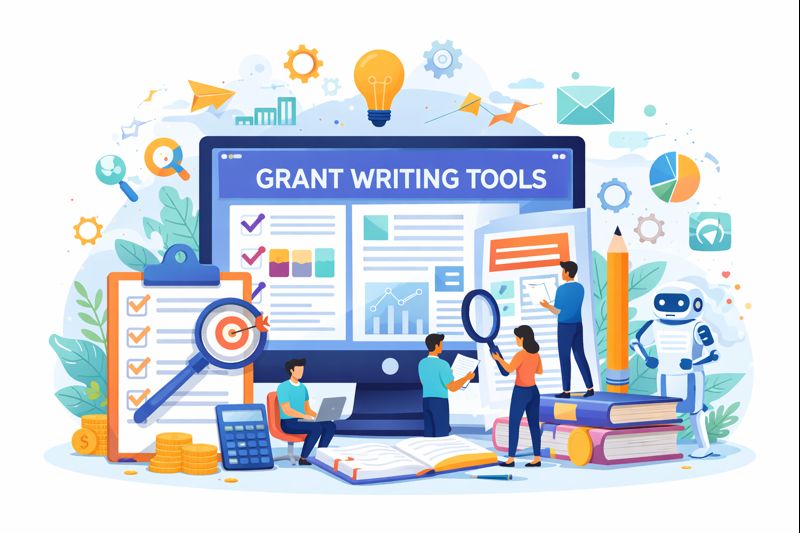
That’s why having the right grant writing tools in your toolbox isn’t a luxury anymore. It’s infrastructure.
This guide breaks down the essential grant writing tools every nonprofit needs, why they matter, and how modern platforms are transforming the entire funding workflow.
Also Read: How to Use Evidence Tables to Support Your Proposals
Why Grant Writing Tools Matter More Than Ever
Grant funding has changed. Donors expect:
- Clear outcomes and measurable impact
- Alignment with their strategic language
- Professional, consistent proposals
- Faster turnaround times
Meanwhile, nonprofits are facing:
- Staff burnout
- Limited budgets
- Fewer dedicated grant writers
- Increasing reporting and compliance demands
The gap between expectations and capacity is where most funding opportunities are lost.
The right tools close that gap by doing three things:
- Eliminating repetitive manual work
- Improving proposal quality and consistency
- Increasing proposal volume without increasing headcount
Core Grant Writing Tools You Need in Your Toolbox
1. Grant Research & Funder Discovery Tools
Before writing begins, you need to know what to apply for.
What these tools do:
- Identify relevant funders by geography, sector, and mission
- Track deadlines and eligibility requirements
- Centralize opportunity pipelines
Why manual research fails:
Searching funders one by one, tracking deadlines in spreadsheets, and relying on outdated lists wastes hours—and increases missed opportunities.
Tool category examples:
Grant databases, opportunity trackers, funder CRM systems.
2. Proposal Planning & Project Management Tools
Grant writing is a team sport, even when one person is “the writer.”
What these tools do:
- Assign tasks (budget, narratives, data, attachments)
- Track progress and deadlines
- Reduce last-minute chaos
Why manual processes fail:
Email-based collaboration creates version confusion, missed inputs, and stress-heavy deadlines.
Tool category examples:
Project management platforms, shared task boards, collaborative planning tools.
3. Centralized Document & Knowledge Repositories
Every nonprofit has institutional knowledge—successful narratives, program descriptions, impact language—that often lives in people’s heads or old files.
What these tools do:
- Store reusable narratives and data
- Maintain version control
- Preserve organizational memory
Why manual processes fail:
Copy-paste from old proposals leads to inconsistencies, outdated data, and errors donors notice immediately.
4. Budgeting & Financial Narrative Tools
Budgets are not spreadsheets—they’re stories told in numbers.
What these tools do:
- Standardize budget formats
- Align narratives with financial data
- Reduce math and formatting errors
Why manual processes fail:
Rushed budgets are one of the fastest ways to lose credibility with funders.
5. Editing, Compliance, and Quality Control Tools
Strong proposals don’t just sound good—they follow instructions precisely.
What these tools do:
- Check word counts and formatting
- Ensure alignment with funder guidelines
- Improve clarity and flow
Why manual processes fail:
Human review alone often misses small errors that cost large opportunities.
The Biggest Bottleneck: Writing at Scale
Even with research tools, project management, and document libraries, most nonprofits still hit the same wall:
Writing capacity.
Traditional grant writing assumes:
- One proposal at a time
- One specialized writer
- Long drafting cycles
But funding success increasingly follows the law of averages: the more high-quality, donor-aligned proposals you submit, the higher your chances of winning.
This is where most tool stacks fall short.
AI-Powered Grant Writing Platforms: The New Core Tool
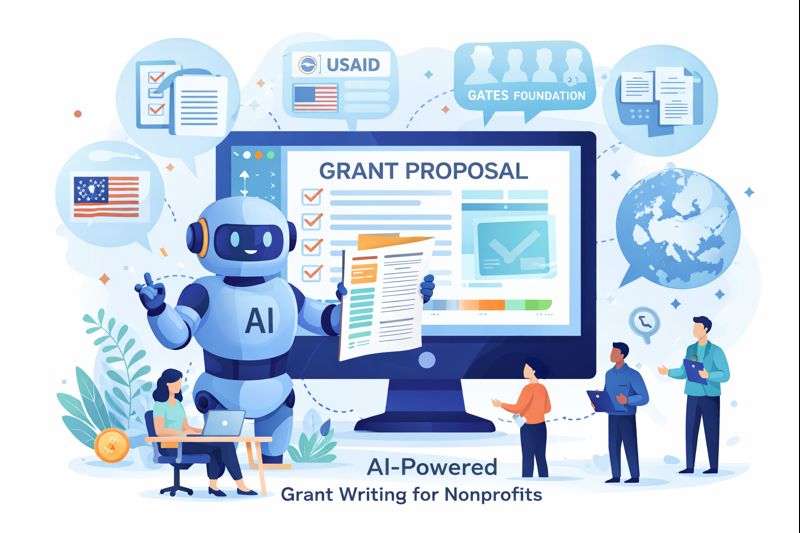
Modern nonprofits are now replacing fragmented tool stacks with AI-driven grant writing platforms designed specifically for scale, donor alignment, and collaboration.
Platforms like GrantWriterAI represent a fundamental shift—not just automation, but infrastructure.
What Makes AI Grant Writing Different?
Unlike generic writing tools, purpose-built AI grant platforms:
- Mirror donor language and tone (USAID, EU, UN, Gates, etc.)
- Adapt to regional English standards automatically
- Generate donor-ready drafts in minutes, not weeks
- Allow staff, interns, and volunteers to contribute safely
- Maintain consistency across dozens of proposals
Instead of replacing human expertise, AI amplifies it.
From Manual Bottleneck to Scalable System
Here’s the difference in practice:
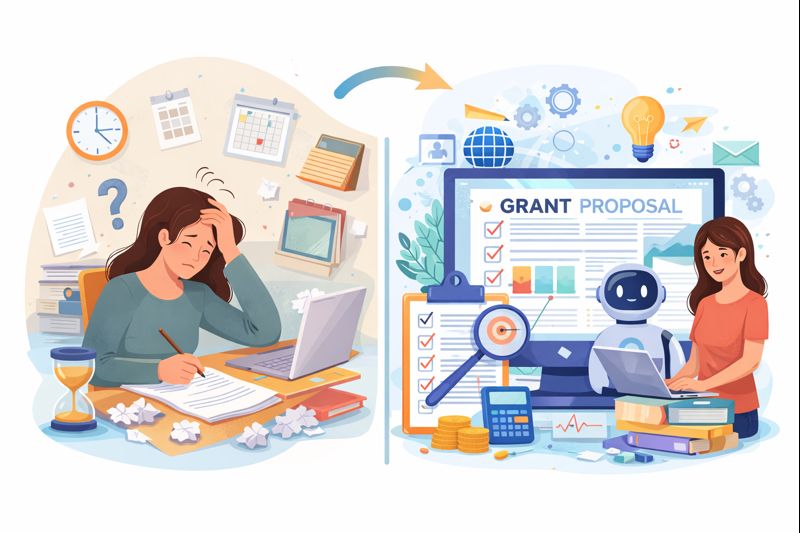
Traditional Manual Process
- One proposal every few weeks
- Heavy dependence on a single writer
- Burnout and backlog
- Inconsistent donor alignment
AI-Enabled Grant Writing System
- 3×–10× proposal volume
- Lower reliance on expensive consultants
- Faster turnaround without quality loss
- Consistent, donor-aligned narratives
GrantWriterAI, developed by Stanford-trained engineers and global funding strategists, was trained over two years on real donor-aligned patterns—making it infrastructure, not just a tool.
Democratizing Grant Writing Across Your Organization
One of the most overlooked benefits of modern grant writing tools is accessibility.
With the right platform:
- Program staff can draft impact sections
- Finance teams can align budgets seamlessly
- Volunteers can support drafts safely
- Boards can contribute without risk
This democratization doesn’t dilute quality—it strengthens it by embedding real program knowledge directly into proposals.
Cost Efficiency: Doing More Without Spending More
Manual grant writing often hides its true cost:
- Full-time salaries
- Freelancer fees
- Opportunity cost of missed deadlines
AI-driven platforms can reduce grant writing costs by 85–90% while increasing output—a rare combination in nonprofit operations.
How to Build the Right Grant Writing Toolbox
When evaluating grant writing tools, ask:
- Does this reduce manual work—or add another system to manage?
- Does it help us write more, not just better?
- Does it align language with donors automatically?
- Can non-writers contribute safely?
- Does it scale with our funding goals?
The future of grant writing isn’t about working harder.
It’s about building smarter systems.
Manual grant writing isn’t a badge of honor—it’s a bottleneck.
The nonprofits that will thrive in the next decade aren’t just mission-driven. They’re system-driven.
When you’re ready to increase proposal volume, reduce writing costs, and align with donor language at scale, explore GrantWriterAI and start free here.
Frequently Asked Questions (FAQs)
1. What are the most important grant writing tools for nonprofits?
Grant research databases, project management tools, document repositories, budgeting tools, and AI-powered grant writing platforms are the core essentials.
2. Why are manual grant writing processes inefficient?
Manual processes slow down proposal development, increase errors, cause burnout, and limit how many grants an organization can pursue.
3. Can AI really help with grant writing?
Yes. Purpose-built AI platforms generate donor-aligned drafts, maintain consistency, and significantly reduce writing time while preserving quality.
4. Will AI replace grant writers?
No. AI enhances grant writers by removing repetitive tasks and enabling them to focus on strategy, relationships, and refinement.
5. How many proposals can AI tools help produce?
Many nonprofits report producing 3×–10× more proposals using AI-enabled grant writing systems.
6. Are AI grant writing tools affordable for small nonprofits?
Yes. Modern platforms are increasingly subsidized and cost far less than hiring full-time staff or consultants.
7. Do donors accept AI-assisted proposals?
Donors care about clarity, alignment, and impact—not how the proposal was drafted. Quality and compliance matter most.
8. Can non-writers use grant writing tools?
Yes. The best tools are designed so staff, interns, and volunteers can contribute without compromising quality.
9. How does AI handle donor-specific language?
Advanced platforms use tone-mirroring engines trained on major donor frameworks to match language and structure automatically.
10. What’s the biggest benefit of upgrading grant writing tools?
The ability to scale funding efforts without scaling burnout, cost, or complexity.