The truth is simple: sustainable nonprofit funding is built, not found
Many nonprofit leaders are quietly carrying the same hope:
“One major donor, one big grant, one perfect funder, and everything will finally be stable.”
That is the biggest lie about nonprofit funding.
It sounds comforting because it gives your organization one clear target. Write the proposal. Meet the donor. Win the grant. Solve the problem.
But real nonprofit sustainability rarely works that way.
The strongest nonprofits do not survive because they find one magical funding source. They survive because they build a funding system. They create repeatable habits, clear donor communication, reliable reporting, diversified income, and a mission story that people can understand quickly.
A single grant can help. A major donor can open doors. A government contract can scale a program. But none of these should become the whole strategy.
According to Urban Institute research, nonprofits on average receive revenue from a mix of private funding, government funding, earned income, and other sources. The same research found that organizations disrupted by government funding changes were more exposed because government funding made up a larger share of their revenue.
That is the real lesson: the danger is not grants, donors, or contracts. The danger is dependence.
Why this lie is so easy to believe
Nonprofit work is urgent.
A youth program needs transport. A food bank needs supplies. A community health initiative needs staff. A grassroots organization needs rent, internet, and basic operations.
When the pressure is high, nonprofit leaders naturally search for fast relief. A big grant feels like oxygen.
The problem is that nonprofit funding is often treated like a rescue mission instead of a management system.
Many organizations chase opportunities only when cash is low. They apply for grants at the last minute. They speak to donors only during campaigns. They create budgets for funders, not for internal decision-making. They treat fundraising as an event instead of a rhythm.
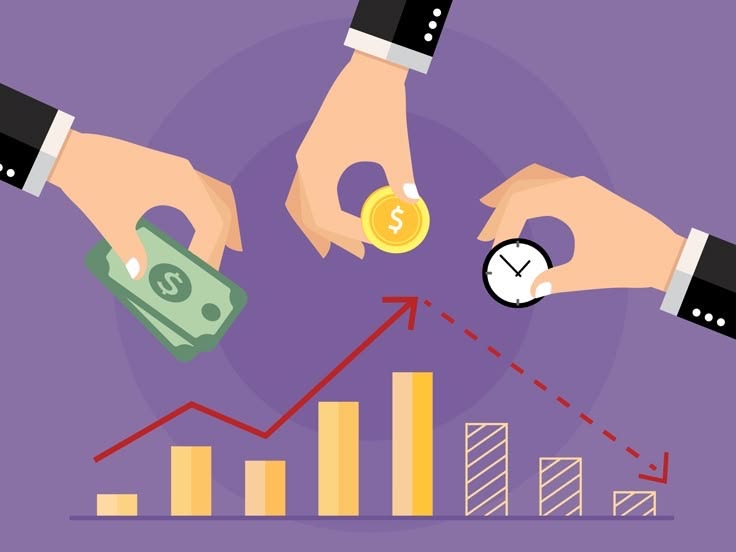
This creates a painful cycle:
The common nonprofit funding cycle
You need money urgently.
You rush to apply.
You win some and lose some.
You deliver the program.
You get busy.
You stop nurturing funders.
Then the money runs low again.
This is why many nonprofits feel like they are always starting over.
The biggest lie about nonprofit funding is not only that one grant will save you. It is the belief that funding is something you “get” instead of something you build over time.
What the data actually shows about nonprofit funding
The funding environment is not simple.
Giving USA reported that U.S. charitable giving reached an estimated $592.50 billion in 2024, growing in current dollars and reaching a new high by that measure.
That sounds encouraging. But it does not mean every nonprofit feels financially secure.
The Center for Effective Philanthropy’s 2025 State of Nonprofits report notes that nonprofit leaders are facing risks tied to political unpredictability, funding uncertainty, and staffing pressure.
Nonprofit Finance Fund also tracks the financial and operational realities of nonprofits through its State of the Nonprofit Sector Survey, focusing on programmatic, operational, and financial health.
So the real picture is mixed.
There is money in the sector. There is generosity. There are foundations, donors, public agencies, companies, and community supporters. But there is also competition, uncertainty, restricted funding, delayed payments, rising costs, and donor fatigue.
That means your organization needs more than hope.
It needs a nonprofit funding strategy that can handle change.
The real problem is not lack of money
Many nonprofit teams say, “We have a funding problem.”
Sometimes that is true. But often, the deeper problem is a system problem.
The organization may not have:
A clear funding message
Can a donor understand what you do in 30 seconds?
Can a funder quickly see who you serve, what problem you solve, why your approach works, and what their money makes possible?
If not, your nonprofit funding problem may begin with unclear communication.
A consistent donor journey
Many nonprofits ask before they build trust.
They send appeals, but not updates. They invite gifts, but not relationship. They celebrate funding wins internally, but forget to show supporters what happened because of their contribution.
A healthy donor journey answers four questions:
Who are we helping?
Why does this matter now?
What changed because people gave?
What can supporters help us do next?
A diversified funding mix
Diversification does not mean chasing every possible income stream.
It means not allowing one source to control your future.
Candid has also emphasized that diversified revenue can help nonprofits weather uncertainty, especially when government funding cuts, freezes, or disruptions destabilize organizations.
A small nonprofit might begin with individual donors, local grants, and a simple monthly giving program. A larger nonprofit might add government contracts, corporate partnerships, major gifts, earned income, and reserves.
The right mix depends on your mission, capacity, geography, and stage of growth.
A repeatable proposal and reporting process
Many nonprofits lose time because every grant feels like a brand-new mountain.
The budget is rebuilt from scratch. The problem statement is rewritten under pressure. The outcomes are unclear. The team searches old files for attachments. Reports are prepared only when deadlines arrive.
This weakens nonprofit funding because funders want confidence. They want to know your organization can plan, execute, measure, and communicate.
The hidden danger of “hero funding”
Hero funding is when an organization believes one funder will become the hero of the entire mission.
This can happen with:
One foundation
A foundation gives a large grant. The organization expands. Staff are hired. Programs grow. Then the grant ends, priorities shift, or renewal is smaller than expected.
Now the nonprofit has a larger cost structure but no replacement revenue.
One government contract
Government funding can be powerful, especially for service delivery. But Urban Institute research on early 2025 disruptions shows how delays or interruptions can affect organizations, especially those with higher dependence on government revenue.
When one public funding stream carries too much of the budget, cash flow becomes fragile.
One major donor
A major donor may love your work. But people’s lives change. Wealth changes. Family priorities change. Interests change.
If one donor quietly becomes your organization’s financial backbone, your mission becomes vulnerable.
One annual event
Events can build community, but they are often expensive and staff-heavy.
If your annual gala, walkathon, or dinner is your main nonprofit funding engine, you need to ask whether the return is strong enough and whether the model is scalable.
What strong nonprofit funding actually looks like
Strong nonprofit funding is not random. It has structure.
It usually includes four layers.
Layer 1: Reliable base funding
This includes recurring donors, membership contributions, small monthly gifts, and repeat supporters.
These gifts may not look dramatic, but they create breathing room.
A nonprofit with 300 monthly donors giving modest amounts has more stability than an organization waiting all year for one grant decision.
Layer 2: Strategic grants
Grants are important. But they work best when they match your real mission, not when they pull your organization in every direction.
A strong grant strategy includes:
Clear funder research
A calendar of deadlines
Reusable proposal language
Updated organizational documents
Program budgets ready in advance
A reporting system before the award arrives
This makes grants part of your nonprofit funding system, not a panic activity.
Layer 3: Major relationships
Major donors, board champions, corporate partners, and institutional allies can help unlock growth.
But these relationships need cultivation.
People rarely give deeply to confusion. They give when they understand the mission, trust the leadership, and see a credible path to impact.
Layer 4: Long-term financial resilience
This includes reserves, unrestricted funding, scenario planning, and honest budgeting.
A nonprofit that raises money but never builds reserves stays fragile. A nonprofit that grows programs without funding operations eventually burns out its team.
Sustainable nonprofit funding must include the boring things: admin, salaries, systems, finance, compliance, and evaluation.
Those are not distractions from mission. They are what allow the mission to continue.
The funding message donors actually need to hear
Many nonprofits speak in activities.
“We run workshops.”
“We train youth.”
“We distribute food.”
“We host community events.”
“We provide counseling.”
These are useful, but they are not enough.
Funders and donors need to understand the change.
Move from activity to transformation
Instead of saying:
“We run after-school programs.”
Say:
“We help students in under-resourced communities stay safe, improve confidence, receive mentorship, and build the habits needed to complete school.”
Instead of saying:
“We provide food parcels.”
Say:
“We help families facing short-term crisis stabilize their households so children can stay in school and parents can focus on recovery.”
This shift matters because nonprofit funding follows clarity.
When people understand the human outcome, they are more likely to care.
The biggest mistake small nonprofits make

Small nonprofits often believe they need to look bigger than they are.
They use complex language. They copy large institutions. They hide their size. They overload proposals with jargon.
But many donors are not looking for the biggest organization. They are looking for a trustworthy one.
Trust comes from:
Clear focus
Say exactly what you do and who you serve.
Honest capacity
Do not promise national scale if your team can only deliver in one district, county, or city.
Simple proof
Use stories, photos where appropriate, attendance records, testimonials, basic outcome tracking, and transparent budgets.
Consistent communication
Send updates before people ask. Share progress. Admit challenges. Explain what is next.
A small nonprofit with clarity can outperform a larger organization with confusion.
Why more applications can increase your odds
Many nonprofit leaders take rejection personally.
But nonprofit funding often works through volume, fit, timing, and relationships.
A declined grant does not always mean your mission is weak. It may mean:
The funder had too many applications.
Your project did not match this cycle.
Your budget was not clear enough.
The funder already had partners in your region.
Your proposal needed stronger evidence.
The timing was wrong.
This is why action matters.
One application gives you one chance. Ten well-matched applications give you learning, feedback, visibility, and better odds.
The goal is not to spam funders. The goal is to build a disciplined pipeline.
A simple nonprofit funding pipeline
Identify aligned funders.
Track deadlines.
Prepare documents early.
Submit consistently.
Follow up respectfully.
Report well.
Stay in touch.
Renew and deepen relationships.
This turns nonprofit funding into a repeatable process.
The role of unrestricted funding

Restricted funding pays for specific projects. Unrestricted funding gives your organization flexibility.
Both matter.
But without unrestricted funding, nonprofits can become program-rich and organization-poor.
That means the programs look active, but the team is exhausted. The organization has grants, but no flexible cash. Staff are serving the community, but basic systems are underfunded.
The strongest nonprofit funding strategies make room for general operating support.
This may include:
Monthly donors
Board giving
Individual appeals
Major gifts
Unrestricted grants
Earned income
Reserves campaigns
Community giving days
Do not apologize for needing operating funds.
A mission cannot run without people, systems, rent, technology, transport, accounting, leadership, and time.
How to stop chasing and start building
The shift from chasing money to building funding is practical.
Start with a 90-day reset.
First 30 days: clarify
Review your current income sources.
Identify your top funding risks.
Update your mission message.
Create one simple case for support.
Organize your core documents.
Next 30 days: prioritize
Choose the best-fit funding channels.
Do not try everything at once.
For example, your next quarter might focus on:
Five foundation prospects
Twenty donor renewal calls
One monthly giving campaign
Three corporate partnership conversations
This is much better than randomly reacting to every opportunity.
Final 30 days: systemize
Create a simple tracker.
Include:
Funder name
Contact person
Deadline
Amount requested
Status
Follow-up date
Reporting requirement
Next action
This basic discipline can change your nonprofit funding results over time.
A better belief about nonprofit funding
Replace this belief:
“One big funder will save us.”
With this belief:
“We will build a funding system that makes our mission easier to support.”
That one sentence changes how your team behaves.
You stop waiting.
You stop panicking.
You stop over-customizing every appeal.
You stop treating donors like ATMs.
You stop measuring success only by the next grant.
Instead, you build assets.
A clear story.
A donor list.
A grant calendar.
A follow-up rhythm.
A reporting habit.
A reserve goal.
A board fundraising culture.
A repeatable communications plan.
That is how nonprofit funding becomes more stable.
Also read:Why Most NGO Ideas Never Get Funded And How Smart NGOs Can Fix It
💡 The Problem Is Not Always Funding — It’s Often How the Project Is Presented
One of the biggest myths in nonprofit funding is that good work automatically gets funded.
It does not.
In many cases, projects miss out not because the mission is weak, but because the idea is not packaged clearly enough for donors and funders to understand, trust, and support. Common problems include:
- A strong idea with a weak proposal
- Unclear project goals or outcomes
- Missing budgets, plans, or supporting documents
- Too much passion, but not enough structure
If you want to overcome this funding barrier, you need more than hope — you need better documentation.
✅ Start with the Free Proposal Template
To help you strengthen your funding case, we’ve created a free proposal template you can use to present your project more clearly and professionally.
This free resource will help you:
- Organize your project idea in a more fundable way
- Communicate your goals and impact more clearly
- Build a stronger case for support
- Save time when preparing donor or grant documents
👉 Download the free proposal template here
🚀 Upgrade: Nonprofit Templates Bundle (37 Templates)
If you want a more complete system for proposal writing, grant readiness, planning, budgeting, and reporting, get the Nonprofit Templates Bundle.
💡 What’s included:
- 5 concept note templates
- Full project proposal and grant report templates
- UN Logframe, Logical Framework Matrix, and Theory of Change templates
- USAID Monitoring & Evaluation Framework + M&E Plan
- Nonprofit budget, work plan, and project timeline templates
- Risk management, sustainability, and communication plan templates
- Stakeholder analysis, gender analysis, and environmental impact templates
- Executive summary and impact assessment templates
- Sponsorship proposal and event proposal templates
- Capacity building plan and partnership agreement templates
- 7 fiscally sponsored organization templates, including grant proposal, budget, agreement, narrative, financial reporting, donor letter, and progress report
👉 Get the full nonprofit templates bundle here
💡 Why This Matters
Funding often follows clarity.
When your project is supported by the right templates, you can:
- Present your work more professionally
- Show funders that your idea is structured and credible
- Strengthen your planning, budgeting, and reporting readiness
- Move from “we need support” to “here is a project worth funding”
The biggest lie is that funding is only about connections or registration. In reality, many projects get overlooked simply because they are not documented well enough to be taken seriously.
Wrap up: the truth that sets nonprofit leaders free
The biggest lie about nonprofit funding is that stability will arrive from one perfect opportunity.
It usually will not.
A grant may help. A donor may help. A contract may help. A campaign may help. But real stability comes from building a funding engine that does not collapse when one part fails.
The nonprofits that grow stronger are not always the ones with the best connections. Often, they are the ones that communicate clearly, apply consistently, nurture relationships, track results, and build trust month after month.
Funding is not just about money.
It is about confidence.
When donors trust your leadership, when funders understand your outcomes, when your team has a system, and when your community sees progress, nonprofit funding becomes less mysterious.
The work becomes steadier.
And steadier funding means your mission has more room to breathe.
FAQs about nonprofit funding
1. What is the biggest lie about nonprofit funding?
The biggest lie is that one big grant, donor, or contract will permanently solve your financial problems. Strong nonprofit funding usually comes from a mix of revenue sources, consistent communication, and reliable systems.
2. Why should nonprofits avoid relying on one funding source?
Relying on one source creates risk. If that donor leaves, a grant ends, or a contract is delayed, the organization may face sudden financial pressure.
3. What are the best sources of nonprofit funding?
Common sources include individual donations, monthly giving, foundation grants, government contracts, corporate partnerships, major gifts, events, earned income, and unrestricted support.
4. How can a small nonprofit attract more funding?
A small nonprofit can attract more funding by clearly explaining the problem it solves, showing proof of impact, building donor relationships, applying consistently, and keeping supporters updated.
5. Are grants the best form of nonprofit funding?
Grants can be valuable, but they are not always the best or most flexible source. Many grants are restricted, competitive, and time-limited. A healthy strategy includes grants but does not depend only on them.
6. What is unrestricted nonprofit funding?
Unrestricted funding is money your nonprofit can use where it is most needed. It can support salaries, rent, technology, planning, administration, and other essential costs.
7. How many funding streams should a nonprofit have?
There is no perfect number. The goal is to have enough diversity that losing one source does not threaten the entire organization.
8. Why do nonprofits struggle with funding even when donations are increasing?
Overall giving may rise, but not every nonprofit benefits equally. Funding can be uneven, restricted, delayed, or concentrated among certain causes and organizations.
9. How can nonprofits build better donor trust?
Nonprofits build trust by communicating clearly, reporting honestly, showing impact, using funds responsibly, and staying in touch before asking for another gift.
10. What is the first step to improving nonprofit funding?
Start by reviewing your current funding mix. Identify your biggest dependency risk, then build a simple 90-day plan to strengthen your message, organize prospects, and follow up consistently.