

In an era where digital fundraising and online giving have become essential for ministry sustainability, choosing the right online giving platform for your church can feel overwhelming. There are dozens of options geared toward faith-based organizations — each with distinct features, fee structures, and value propositions. The goal of this guide is simple: help church leaders like you cut through the confusion and make a confident choice with technology that supports generosity, not complexity.
Whether you’re a small congregation exploring your first giving solution or a large ministry evaluating a switch, this comparative guide will walk you through the top online giving platforms, how to evaluate them, and how to match a solution to your church’s unique needs.
What Are Online Giving Platforms & Why They Matter for Churches
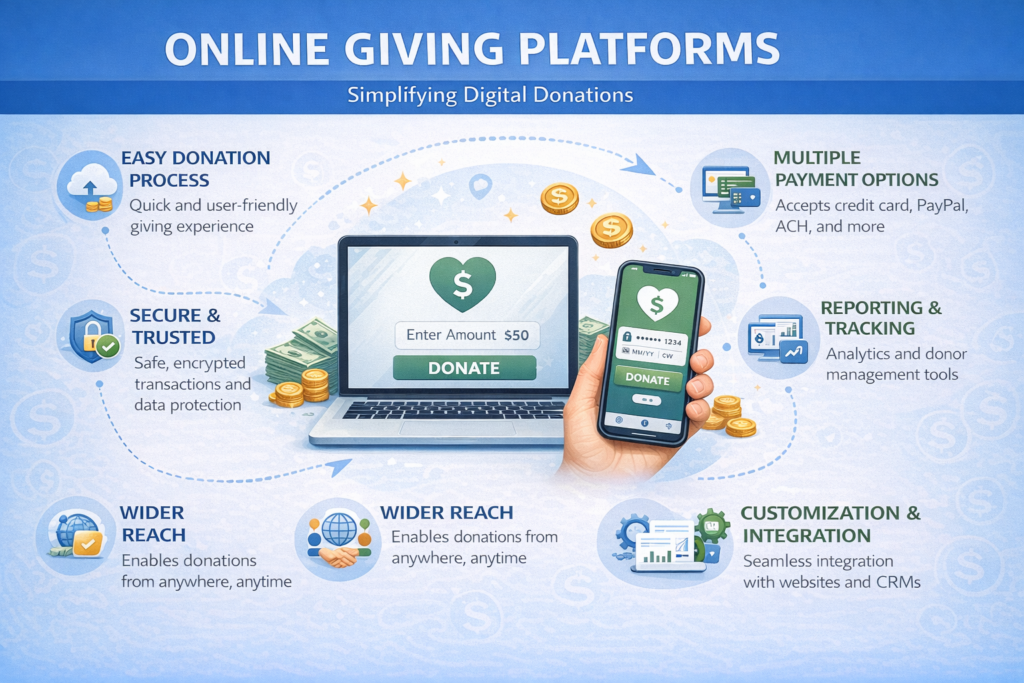
Before we dive into comparisons, let’s define what we’re talking about:
- Online giving platforms are digital tools that enable churches to receive donations — including tithes, offerings, recurring gifts, and special campaign funds — through the internet. These systems can integrate with websites, mobile apps, text messaging, and even kiosks to create multiple giving touchpoints for your community.
The importance of online giving technology for churches can’t be overstated:
- Congregants increasingly prefer digital transactions over cash or checks.
- Churches that offer online giving often see an increase in donation participation and consistency.
- Having options like recurring gifts, text-to-give, and mobile giving enhances stewardship and financial planning.
Now let’s break down how to compare the platforms you’ll likely encounter.
How Online Giving Platforms Are Transforming Church Fundraising
Church fundraising is evolving beyond the Sunday collection plate. Today, online giving platforms help ministries:
- Accept donations anytime from anywhere
- Enable recurring gift plans that sustain ministry long term
- Provide donor dashboards and reporting for better financial transparency
- Offer tools that integrate with church management systems (ChMS) to streamline workflows
The right platform doesn’t just take money — it strengthens relationships, builds trust, and enhances generosity across your community.
Key Features to Look for in Church Online Giving Platforms
When comparing online giving platforms for your church, these core capabilities matter most:
1. Multiple Giving Channels
One of the most important features of modern online giving platforms is the ability to support multiple giving channels. Church members have different preferences and comfort levels with technology, so flexibility matters. A strong platform should allow donations through website giving forms for desktop users, mobile apps for on-the-go giving, and text-to-give for quick, spontaneous contributions. Kiosks at church events or in the lobby are also valuable for in-person services and special gatherings. Not every online giving platform offers all these options, so churches should carefully evaluate which channels best serve their congregation and community outreach goals.
2. Recurring Giving Support
Recurring giving is a cornerstone of sustainable church fundraising. When online giving platforms make it easy to set up automatic weekly or monthly donations, churches benefit from predictable income and improved financial planning. For donors, recurring giving supports faithful tithing even when they are traveling, busy, or unable to attend services in person. The best platforms allow congregants to manage their recurring gifts easily—adjusting amounts, payment methods, or schedules without staff assistance. This convenience builds trust and long-term commitment while reducing administrative workload for church finance teams.
3. Donor Management & Reporting

Effective donor management and reporting tools are essential components of high-quality online giving platforms. Churches need clear visibility into donation trends, campaign performance, and individual giving histories to practice good stewardship. Robust reporting tools help leadership understand seasonal fluctuations, track recurring donations, and plan ministry budgets with confidence. Many platforms also provide downloadable reports for accounting, tax statements for donors, and dashboards for real-time insights. Without strong reporting features, churches may struggle with manual tracking, errors, or lack of clarity in financial decision-making.
4. Integration With Church Systems
Integration is a major factor when choosing among online giving platforms. Platforms that connect seamlessly with your church management system (ChMS) or accounting software save significant administrative time. Integrated systems automatically sync donor records, contribution histories, and financial data, reducing the need for manual entry and lowering the risk of errors. This alignment ensures that staff, volunteers, and leadership are always working from accurate, up-to-date information. For growing churches especially, system integration improves efficiency, supports transparency, and allows teams to focus more on ministry and less on data management.
5. Security & Compliance
Security and compliance are non-negotiable when evaluating online giving platforms. Churches handle sensitive financial and personal information, so trust is critical. Any platform you consider should be compliant with payment industry standards such as PCI DSS and use strong encryption to protect donor data. Secure platforms safeguard credit card information, prevent fraud, and maintain donor confidence. Transparency around data handling and security practices is also important. When congregants feel confident that their information is safe, they are far more likely to embrace digital giving and recurring donations.
Also read:Church Funding Secrets: How to Turn Grants Into Annual Support
Top Church Online Giving Platforms: Features, Pros, & Cons
Below is a snapshot of some of the leading online giving platforms church leaders are choosing in 2026. Each has unique strengths depending on your ministry’s needs.
Donorbox

Best for: Easy setup, flexible donor tools
Donorbox is a versatile online giving platform that offers customizable donation forms you can embed on your website, support for recurring gifts, peer-to-peer campaigns, and mobile giving. Churches appreciate the lack of startup or monthly fees and the ability to accept multiple payment types, including Apple Pay and Google Pay.
Pros:
- No contract or monthly fees
- Supports text-to-give and event ticketing
- Easy donor management
Cons:
- Transaction fees still apply
- Advanced features may require integrations
Tithe.ly
Best for: Church-centric digital giving ecosystem
Designed specifically for ministries, Tithe.ly’s online giving platforms provide digital tithing, mobile app capabilities, and options like covering transaction fees optionally. Its integration with church management systems makes it an appealing choice for churches seeking a unified tech stack.
Pros:
- Tailored to church needs
- Strong recurring giving options
- Good integration with ChMS
Cons:
- Fees vary based on usage and plan
- Some advanced engagement features may be separate add-ons
Pushpay
Best for: Engaging donor experience
Pushpay’s giving technology focuses on ease and engagement, offering mobile, web, and kiosk giving. It’s known for intuitive user experiences and emphasis on analytics and donor journey insights.
Pros:
- Excellent user interface
- Strong analytics and reporting
- Good for larger congregations
Cons:
- Pricing may be higher than simpler platforms
Givelify
Best for: Simple mobile giving
Givelify is ideal for churches that want a straightforward app-based giving experience. It supports 24/7 donation access and real-time tracking for church leaders.
Pros:
- Very simple for donors to use
- Real-time giving insights
Cons:
- Less robust backend tools compared with full ChMS integrations
Subsplash Giving
Best for: Unified digital church experience
Subsplash’s giving tools are part of a broader church engagement platform that includes apps and management tools. Its online giving platforms are feature-rich and emphasize built-in donor experience and branding.
Pros:
- Excellent custom branding
- Seamless engagement tool suite
Cons:
- May be more than needed for smaller churches
Choosing the Right Online Giving Platform for Your Church
Selecting a platform isn’t just about picking the most popular solution — it’s about aligning with your ministry’s vision and your donors’ expectations.
Ask These Questions First
- What giving channels do our congregants prefer?
- Do we need robust reporting or simple tracking?
- How important is integration with our current systems?
- What is our budget for online giving platforms?
Your answers will help narrow the field quickly.
Common Pain Points When Choosing Online Giving Platforms
Church leaders frequently encounter these challenges:
1. Fee Structures Are Confusing
One of the most common frustrations churches face when evaluating online giving platforms is understanding the true cost. Many platforms advertise low or “no monthly fees,” but still charge processing fees, platform fees, payout fees, or additional costs for features like text-to-give, mobile apps, or donor analytics. These layered pricing models make it difficult to compare platforms fairly. Churches often discover hidden costs only after onboarding. To avoid surprises, leaders should request a full pricing breakdown and calculate the total cost based on expected donation volume and feature usage.
2. Too Many Features to Sort Through
Online giving platforms often promote long lists of advanced features, which can quickly overwhelm church leaders trying to make a decision. While tools like custom branding, advanced analytics, and multi-campus support can be valuable, not every church needs them. Smaller or mid-sized churches may only require basic online donations, recurring giving, and simple reporting. Choosing a platform with excessive features can increase costs and complexity without delivering real value. The best approach is to focus first on your church’s core needs, then evaluate whether additional features truly support your ministry goals.
3. Integration Issues
Integration challenges can become a major operational headache when online giving platforms don’t sync properly with church management systems (ChMS) or accounting software. Without integration, staff and volunteers may need to manually export and re-enter donation data, increasing the risk of errors and consuming valuable time. Over time, these workarounds erode productivity and create inconsistencies across financial records and member profiles. Churches should prioritize platforms that offer seamless integration with their existing systems, ensuring accurate data flow, better reporting, and a smoother experience for both donors and administrative teams.
How to Evaluate Online Giving Platforms Step-by-Step
Here’s a simple process you can follow:
- List Your Church’s Requirements — channels, reporting, recurring gifts
- Set a Realistic Budget — including all potential fees
- Shortlist 3–5 Platforms
- Request Demos or Trials
- Review Integration Capabilities
- Talk to Other Churches Using the Tools
This approach saves time and helps you avoid common decision traps.
Wrap Up: Finding Confidence in Your Church’s Online Giving Choice
Choosing the right online giving platforms for your church doesn’t need to be confusing or stressful. With a clear understanding of your needs, a structured evaluation process, and insights into the leading options available in 2026, you can confidently adopt technology that enhances generosity and financial stewardship in your community.
The best online giving platforms will feel seamless for your donors and practical for your staff — helping your ministry focus less on logistics and more on mission.
10 Frequently Asked Questions (FAQs)
1. What are online giving platforms?
Online giving platforms are digital fundraising tools that enable churches to collect donations electronically through websites, mobile apps, text messages, and kiosks.
2. Why do churches need online giving platforms?
They make it easier for congregants to give anytime and help increase donation consistency and engagement.
3. Are online giving platforms expensive?
Costs vary — many have no monthly fee but charge transaction fees. Always compare total costs.
4. Can donors give by text message?
Yes — many platforms support text-to-give as an easy giving channel.
5. Do online giving platforms integrate with church software?
Many do, improving data flow and reducing manual work.
6. What should churches look for first in a platform?
Start with giving channels, fees, and donor experience.
7. Can platforms support recurring gifts?
Yes — recurring giving is a core feature most churches need.
8. Is mobile giving included in online giving platforms?
Yes—mobile giving availability is standard among top platforms.
9. Can platforms help with fundraising campaigns?
Many provide tools for special campaigns, peer-to-peer fundraising, and donor engagement.
10. What is the best way to choose a platform?
Evaluate your church’s needs, compare features side-by-side, and test platforms before deciding.