
In a world where digital fundraising and online giving are now central to nonprofit success, many organizations still struggle to unlock the full potential of social platform fundraisers — especially on Facebook and Instagram. At a glance, these tools seem like magic buttons for donations. Yet, without strategy, even well-meaning campaigns fall flat, engagement stays low, and social giving feels ineffective. The good news? With the right approach, you can turn social engagement into real fundraising impact and make your Facebook & Instagram fundraisers a reliable part of your digital fundraising strategy.
Why Facebook & Instagram Fundraisers Matter for Digital Fundraising and Online Giving
Before we dive into tactics, it’s important to understand why Facebook and Instagram fundraisers are so powerful — and why they sometimes feel ineffective despite that potential.
The Rise of Social Fundraising in Digital Fundraising
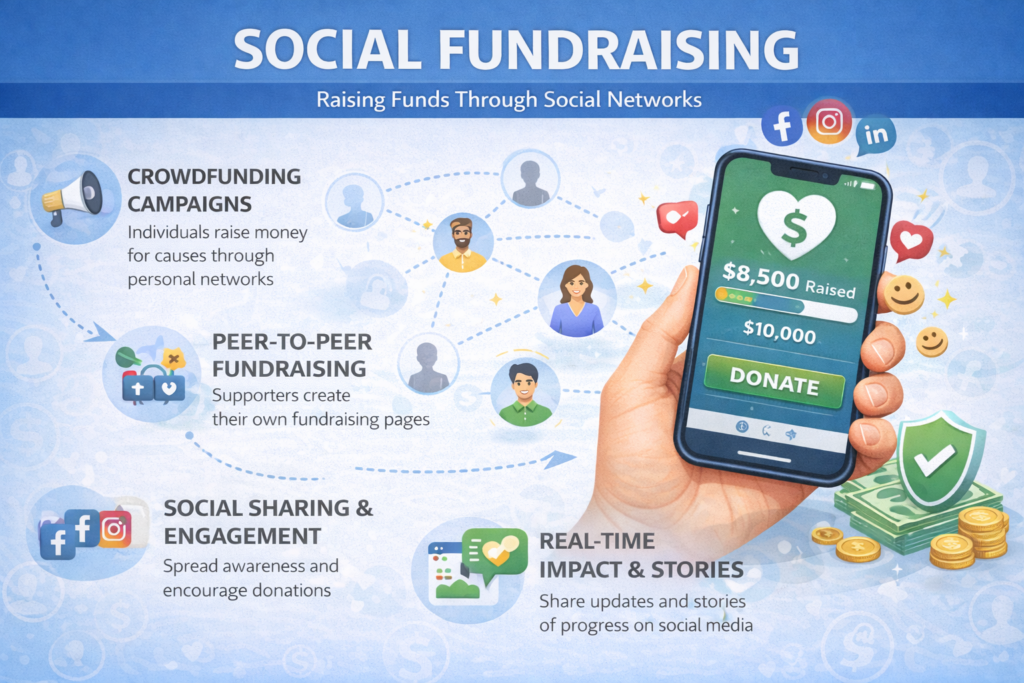
The rise of social fundraising has fundamentally reshaped digital fundraising and online giving by meeting donors where they already spend their time. With billions of users actively engaging on Facebook and Instagram every day, these platforms have evolved into powerful digital ecosystems for connection, storytelling, and action.
For nonprofits, this means fundraising is no longer limited to external donation pages or email appeals. Instead, giving can happen seamlessly within a supporter’s daily social experience. By embedding donation tools directly into posts, stories, and live videos, social fundraising shortens the journey from awareness to action, making digital fundraising more immediate, emotional, and accessible to a global audience.
Why Social Giving Sometimes Feels Ineffective
Despite the potential of social platforms, online giving through social media can feel ineffective when strategy is missing. Many nonprofits focus on posting frequently rather than intentionally, flooding feeds with donation requests that lack context or emotional connection. This often results in high visibility but low conversion rates, leaving teams frustrated with minimal fundraising results. Social giving also suffers when organizations fail to guide supporters toward a clear action or rely solely on likes and shares instead of meaningful engagement. Without storytelling, urgency, and follow-up, digital fundraising efforts can appear successful on the surface while generating little real impact.
Understanding Facebook & Instagram Fundraisers
What Are Facebook & Instagram Fundraisers?
Facebook and Instagram fundraisers are native, built-in fundraising tools designed to simplify digital fundraising and online giving directly within social media platforms. They allow both individuals and registered nonprofit organizations to raise funds without redirecting donors to external websites. This frictionless experience removes common barriers to giving, such as long forms or page drop-offs. Donors can contribute in just a few taps while remaining inside the app they already trust and use daily. These fundraisers can support personal causes, birthdays, emergencies, or verified nonprofit missions, making them a flexible and accessible solution for modern social fundraising campaigns.
Integration Between Facebook & Instagram
Because both platforms are owned by Meta, Facebook and Instagram fundraisers are deeply integrated, creating a unified ecosystem for social giving. A fundraiser launched on Facebook can be seamlessly shared across Instagram feeds, Stories, and even live videos, expanding visibility without additional setup. This integration allows nonprofits to reach diverse audience segments across both platforms while maintaining a single fundraising goal and donation flow. Supporters can discover, engage with, and donate to the same campaign in multiple ways, increasing touchpoints and reinforcing momentum. This cross-platform synergy significantly enhances reach, engagement, and overall digital fundraising effectiveness.
Crafting a Winning Strategy for Fundraising on Facebook & Instagram
To use Facebook & Instagram fundraisers successfully, you need both strategy and execution. Below are tested steps to make your social giving efforts work.
Know Your Audience First
Ask:
- Who are your current supporters?
- Where do they spend their time online?
- What motivates them to give?
Answering these allows you to tailor digital fundraising messaging that resonates. Analytics tools built into Facebook and Instagram provide insights into follower demographics and behavior.
Set Clear Goals for Your Fundraiser

Vague objectives like “raise awareness” rarely convert into donations. Set specific, measurable goals such as:
- Amount to raise
- Number of donors targeted
- Engagement rate to achieve
These metrics guide every part of your campaign.
Tell Compelling Stories That Move Donors
Numbers matter — but emotional connection converts. Share real stories about people, communities, or causes affected by your mission. Use powerful visuals, short testimonials, and heartfelt captions to drive the emotional impact.
Use Platform Tools Effectively
Donation Stickers and Call-to-Action Buttons
Instagram stories and reels support donation stickers, making it effortless for users to give without leaving the app. Facebook pages and posts also allow “Donate” buttons that link directly to your fundraiser.
Live Fundraising Events
Live video on Facebook and Instagram can boost urgency and engagement. Hosting a Q&A, event, or behind-the-scenes live stream increases real-time interaction — and encourages spontaneous giving.
Peer-to-Peer Fundraising
Encourage supporters to create their own fundraisers for your cause. This expands reach into personal networks and often results in higher total gifts.
Optimize Your Fundraiser Launch
A successful fundraiser doesn’t launch by accident — it’s announced strategically.
- Tease the fundraiser in advance
- Build anticipation with countdowns
- Post reminders across your social channels
This kind of multi-touch approach increases the visibility of your fundraising goal.
Track and Adjust Using Analytics

Monitor engagement metrics like:
- Click-through rates
- Story interactions
- Donation conversions
Use these insights to refine your messaging and posting schedule mid-campaign.
Best Practices for Use of Facebook & Instagram Fundraisers
Craft Shareable, Emotionally Intelligent Content

To succeed with digital fundraising and online giving, your content must be designed for sharing — not just viewing. Supporters are more likely to repost content that feels authentic, emotionally resonant, and easy to understand. Focus on real stories that highlight impact, urgency, and human connection rather than generic donation appeals.
Pair these stories with compelling visuals such as short videos, before-and-after images, or quotes from beneficiaries. Most importantly, include a clear and simple call to give so supporters know exactly what action to take. When content feels meaningful and personal, it travels farther and converts better.
Thank Donors Publicly
Public donor recognition is a powerful but often underused element of social fundraising. When you thank donors openly — through comments, posts, or Stories — you reinforce appreciation while also creating social proof. Seeing others give validates the cause and encourages additional participation, especially in peer-driven environments like Facebook and Instagram.
Public gratitude also strengthens donor relationships, making supporters feel seen and valued rather than transactional. However, recognition should always be respectful and optional, honoring privacy preferences. When done well, public thank-yous turn donors into advocates and help normalize giving as a shared community action.
Avoid Slacktivism Pitfalls
Slacktivism occurs when social engagement stops at likes, shares, or comments without leading to meaningful action. While these interactions boost visibility, they don’t automatically translate into online giving. This is why social giving can feel ineffective for many nonprofits. To avoid this trap, guide supporters intentionally from awareness to impact. Pair every awareness post with a clear next step — donate, start a fundraiser, attend a live event, or share a personal story. By consistently linking engagement to action, digital fundraising becomes purposeful rather than passive, driving real results instead of surface-level metrics.
Coordinate With Offline and Other Digital Channels
Facebook and Instagram fundraisers should never operate in isolation. To maximize results, integrate them into a broader digital fundraising ecosystem. Promote your social fundraisers through email newsletters, website banners, SMS alerts, and even offline events or printed materials.
Each channel reinforces the campaign and reaches supporters who may not be active on social media at the same time. This omnichannel approach increases touchpoints, strengthens message recall, and creates momentum across platforms. When online giving is embedded throughout your communications funnel, supporters encounter consistent reminders that make participation easier and more natural.
Common Challenges and How to Overcome Them
Low Engagement
Low engagement is one of the most common challenges in digital fundraising and online giving on social platforms. When posts fail to gain traction, it’s often a sign that the content isn’t resonating with your audience — not that supporters don’t care. Revisit your creative assets and prioritize short-form video, which consistently performs better than static posts. Experiment with different storytelling angles, captions, and emotional hooks to see what sparks interaction. Testing posting times and frequency can also make a noticeable difference. Engagement improves when content feels timely, human, and designed for how people actually consume social media.
Plateaued Donations
When donations stall midway through a campaign, momentum needs to be reignited. Plateaued donations don’t mean your online giving strategy has failed — they signal an opportunity to introduce urgency. Tactics such as progress milestones, public fundraising updates, or countdowns remind supporters that their contribution still matters. Matching gifts and time-sensitive challenges are especially effective, as they multiply perceived impact and prompt quicker decisions. By clearly communicating “why now,” you encourage hesitant supporters to act and help push your digital fundraising campaign past the plateau.
Algorithm Changes
Frequent algorithm changes on Facebook and Instagram can significantly impact visibility, making digital fundraising feel unpredictable. Platforms increasingly prioritize varied, engaging content, which means relying on one format — such as static images — can reduce reach. To stay visible, diversify your content mix with videos, Stories, Reels, live sessions, and interactive elements like polls. When organic reach declines, strategic paid boosts can help extend visibility to the right audience at the right time. Adapting quickly to algorithm shifts ensures your online giving campaigns remain discoverable and effective.
Also read:Using TikTok for Your Ministry Fundraising Goals and Win Over Gen-Z Donors
Wrap-Up: Making Facebook & Instagram Fundraisers Work for You
Digital fundraising isn’t about being everywhere — it’s about being effective where your audience already engages. Facebook & Instagram fundraisers are powerful tools for online giving, but only when used thoughtfully and strategically. By understanding your supporters, telling compelling stories, and leveraging platform-specific fundraising features, you can transform social giving from a feel-good exercise into a revenue generator that amplifies your mission and fuels impact.
10 FAQs About Facebook & Instagram Fundraisers
1. What’s the difference between a Facebook fundraiser and an Instagram fundraiser?
Facebook fundraisers are started and managed through Facebook but can be shared on Instagram. Instagram fundraising uses Meta’s tools like donation stickers and live fundraisers — both leverage the same backend donation system.
2. Do Facebook & Instagram charge fees for fundraisers?
Meta’s fundraising tools historically had no platform fees for nonprofits, though changes in payment processing partners (e.g., PayPal Giving Fund) may shift fee structures. Always check current terms.
3. Can anyone start a fundraiser on Facebook or Instagram?
Individuals can start personal fundraisers; nonprofits must be verified and meet Meta’s eligibility criteria.
4. How long should my fundraiser run?
Fundraiser length depends on your goals; short, urgent campaigns often drive quick momentum, while longer campaigns require consistent content to maintain visibility.
5. How do I add donation stickers on Instagram?
Once your account is eligible and linked to a Facebook nonprofit page, you can add donation stickers to Stories via the sticker tool.
6. Does social media fundraising really work?
Yes — when executed well, social fundraisers amplify your cause to new audiences and can significantly contribute to online giving goals.
7. How do I measure success beyond donations?
Track engagement metrics like shares, comments, click-throughs to your fundraiser page, and increases in follower numbers.
8. Should nonprofits use paid ads to promote fundraisers?
Paid promotion can help if organic reach is limited — particularly for time-sensitive campaigns.
9. What content types work best for fundraisers?
Live video, compelling images, and authentic donor stories consistently outperform generic text posts.
10. Can supporters host fundraisers on my behalf?
Yes — peer-to-peer fundraising allows supporters to create campaigns for your cause, expanding your reach.