
Many nonprofits and ministries do meaningful, life-changing work—but struggle to explain that value in ways funders can easily understand. Passion, stories, and mission matter, yet they are no longer enough on their own. Funders increasingly want evidence. They want to know what changed, for whom, and by how much. This is where many strong organizations get stuck: they know their programs work, but they don’t know how to quantify that impact.
That’s why learning how to use impact metrics to strengthen every proposal is now a core grant-writing skill. Impact metrics turn good intentions into credible results. They translate day-to-day activities into funder-ready proof and help reviewers quickly see why your program deserves investment.
In this guide, you’ll learn exactly how to use impact metrics to strengthen every proposal—even if you don’t have sophisticated evaluation systems. We’ll break down what funders actually mean by “metrics,” how to choose the right ones, and how to integrate them into your narrative so your proposals feel confident, clear, and compelling.
The Strategic Power of Impact Metrics in Grant Proposals
Why Impact Metrics Matter More Than Ever to Funders
Funders are under pressure to justify their decisions to boards, regulators, and the public. As a result, they increasingly rely on impact metrics to compare proposals, assess risk, and predict return on investment. Understanding how to use impact metrics to strengthen every proposal means understanding this funder mindset.
Impact metrics help funders answer three critical questions:
- Is the problem being addressed real and measurable?
- Does this program produce meaningful change?
- Can this organization track and report results responsibly?
When metrics are clear and credible, proposals feel safer to fund. When metrics are vague or missing, even strong programs may be passed over. Metrics are not about perfection—they are about clarity and confidence.
What Funders Mean by “Impact Metrics”
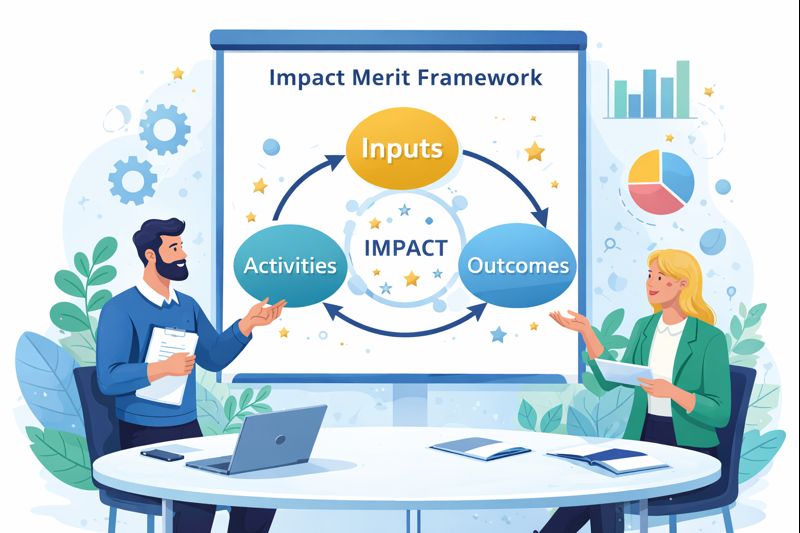
Many organizations hear the phrase impact metrics and immediately think of expensive software, advanced analytics, or academic-style evaluations. This misconception prevents otherwise strong programs from fully demonstrating their value. In reality, most funders are not looking for complexity—they are looking for clarity. To understand how to use impact metrics to strengthen every proposal, it’s essential to understand what funders actually mean by the term.
Funders generally expect three interconnected categories of metrics. Output metrics describe what you delivered, such as the number of people served, workshops held, or meals distributed. Outcome metrics explain what changed because of those activities—skills gained, behaviors improved, or conditions stabilized.
Impact indicators capture longer-term effects, such as improved health, educational attainment, or economic stability. While all three matter, funders typically care most about outcomes, supported by outputs. Clear differentiation between these levels shows strategic thinking and helps reviewers quickly understand your program’s effectiveness. When metrics are well-defined and logically connected, proposals feel credible, focused, and fundable.
Metrics Are About Meaning, Not Math
Funders value metrics that clearly reflect real-world change, not complicated formulas or impressive-sounding numbers. Simple, relevant measures that directly connect to your program’s purpose are often far more persuasive than complex statistics with unclear meaning.
When metrics are easy to understand, funders can quickly see impact without interpretation. Meaningful metrics build confidence, reduce uncertainty, and make your proposal easier to champion internally—regardless of organizational size or data sophistication.
How to Use Impact Metrics to Strengthen Every Proposal Step by Step
Start With the Change You Want to See
The most effective way to learn how to use impact metrics to strengthen every proposal is to begin with the end in mind. Too many organizations start by asking, “What data do we already collect?” instead of asking the far more important question: What change actually matters? Funders invest in outcomes, not spreadsheets. They want to understand how lives, behaviors, or conditions will be different because your program exists.
Clarifying the desired change creates instant focus. Whether the goal is increased food security, improved academic performance, reduced isolation among seniors, or greater job readiness, naming the change first makes everything else easier. Once the change is defined, metrics become tools—not obstacles.
You can then select indicators that directly demonstrate progress toward that outcome. This approach ensures that metrics serve the story of impact rather than distracting from it. When metrics are anchored to meaningful change, proposals feel intentional, aligned, and credible. Funders can quickly see not just what you do, but why it matters and how success will be recognized.
Avoid Measuring What’s Convenient
One of the most common mistakes is choosing metrics simply because they are easy to collect. Convenience-driven metrics—such as attendance alone—often fail to capture meaningful change. While easy metrics have a place, they should never replace relevant ones. Prioritize measures that reflect the outcomes funders care about most, even if they require slightly more effort. Relevance builds trust and strengthens proposals far more than ease ever will.
Choose Metrics That Match Funder Priorities
Metrics are most persuasive when they align directly with what the funder is trying to achieve. A core principle of how to use impact metrics to strengthen every proposal is customization. Different funders view success through different lenses, and strong proposals reflect that reality.
Education funders tend to prioritize academic progress and skill development. Health funders focus on behavior change, prevention, or improved conditions. Workforce funders care deeply about job placement, retention, and wage growth.
Tailoring metrics to these priorities makes alignment obvious and reduces the mental effort required from reviewers. Funders should never have to guess how your results connect to their goals—you should show that connection clearly and explicitly. When metrics mirror donor priorities, proposals feel relevant, strategic, and easy to support. Customization does not mean exaggeration; it means thoughtful framing that highlights the most relevant dimensions of your impact.
One Program, Multiple Metric Sets
The same program can legitimately report different metrics depending on the funder’s focus—without changing the program itself. A job-training program might report employment outcomes to a workforce funder and confidence or stability outcomes to a community foundation. This flexibility allows one strong program to appeal to multiple funders while maintaining integrity, consistency, and clarity.
Use Baselines to Show Progress, Not Perfection
Many organizations hesitate to use impact metrics because they worry their results won’t look impressive enough. This hesitation often leads to vague language or the absence of metrics altogether—both of which weaken proposals. A core principle of how to use impact metrics to strengthen every proposal is understanding that funders are not looking for perfection; they are looking for progress. Baselines are the most effective way to show that progress clearly and honestly.
A baseline establishes where participants start before your program begins. By comparing that starting point to where participants end up, you make change visible and credible. Common baseline tools include pre- and post-program surveys, initial versus follow-up assessments, and entry versus exit status comparisons.
These approaches allow you to show movement over time, even when change happens gradually. Funders appreciate this transparency because it demonstrates realistic expectations, thoughtful evaluation, and a commitment to learning. Incremental progress, when clearly documented, is far more persuasive than bold claims without evidence.
Small Gains Still Matter
Small, realistic gains often carry more credibility than dramatic but unsupported results. Demonstrating steady improvement shows that your organization understands the complexity of change and tracks it responsibly. Funders trust organizations that report honest progress, even when outcomes are modest, because it signals integrity, accountability, and long-term potential for growth.
Integrate Metrics Into the Narrative (Not Just a Table)
Metrics are most effective when they are woven into the proposal narrative rather than isolated in charts or tables. To truly master how to use impact metrics to strengthen every proposal, metrics must support the story you are telling at every stage. When data appears only in an outcomes section, reviewers may struggle to connect it to the problem or program design.
Strong proposals integrate metrics throughout. In the statement of need, data defines the scope and urgency of the problem. In the program description, metrics clarify what success looks like and how activities lead to outcomes. In the outcomes section, metrics serve as evidence that change is expected and measurable.
This integration creates a logical flow from problem to solution to results, making the proposal easier to follow and evaluate. Metrics become part of the narrative arc rather than a technical afterthought.
Metrics Support the Story
Stories create emotional connection, but metrics provide proof. When combined thoughtfully, they reinforce each other. Metrics ground stories in evidence, while stories give metrics meaning. Together, they create narratives that are both compelling and credible—exactly what funders are looking for.
Balance Quantitative and Qualitative Evidence
Numbers alone can feel abstract, while stories alone can feel anecdotal. Funders consistently prefer a balance of both. Understanding how to use impact metrics to strengthen every proposal includes pairing quantitative data with brief qualitative examples that illustrate what those numbers mean in real life.
For example, stating that “82% of participants increased reading levels” provides clear evidence of success. Adding a short quote, observation, or example from a participant helps reviewers visualize that change. This balance humanizes data without sacrificing credibility. It shows that your organization tracks results systematically while remaining connected to the people behind the numbers. When done well, this approach makes impact feel both measurable and meaningful.
Use Stories Strategically
Stories should support and illustrate metrics—not replace them. A well-chosen example can bring data to life, but it should always reinforce documented outcomes. Strategic storytelling strengthens trust by showing that your numbers represent real people and real change, not isolated anecdotes.
Keep Metrics Realistic and Reportable
One of the most common mistakes organizations make with impact metrics is setting goals that sound impressive but are difficult—or impossible—to track and report consistently. Overly ambitious metrics can quickly undermine credibility when organizations cannot produce the data funders expect. A key principle of how to use impact metrics to strengthen every proposal is choosing metrics that are realistic, manageable, and sustainable over time.
Strong metrics align with your existing workflows and capacity. If collecting a metric requires entirely new systems or excessive staff time, it is likely not sustainable. Funders value transparency and feasibility far more than inflated numbers. Simple tracking tools such as attendance logs, pre- and post-surveys, and follow-up check-ins are often more than sufficient.
What matters most is that metrics are collected consistently and reported honestly. When funders see that you understand your limits and plan accordingly, trust increases. Realistic metrics signal maturity, reliability, and readiness to manage grant funds responsibly.
Feasibility Builds Trust
Funders prefer metrics you can actually deliver over impressive-sounding numbers that cannot be sustained. Feasible metrics reduce uncertainty and demonstrate that your organization understands both its impact and its operational capacity. This honesty builds confidence and makes funding decisions easier.
Use Metrics to Reduce Funder Risk
Impact metrics are not only tools for demonstrating success—they are powerful risk-management signals. Funders are inherently cautious because they are accountable for how resources are used. Proposals that clearly demonstrate how to use impact metrics to strengthen every proposal reassure funders that programs will be monitored, evaluated, and improved as needed.
Clear metrics signal strong management practices, responsible stewardship of funds, and the capacity to learn and adapt over time. They show that your organization does not simply implement programs and hope for the best, but actively tracks progress and responds to challenges. This reduces perceived risk and increases funder confidence. When funders believe that outcomes will be measured and adjustments made if necessary, they are far more likely to invest.
Metrics = Risk Management
Clear, well-chosen metrics make it easier for funders to say yes and defend that decision internally. Metrics provide the evidence funders need to demonstrate due diligence, accountability, and impact—turning uncertainty into confidence.
Wrap-Up: Impact Metrics Turn Good Programs Into Funded Programs
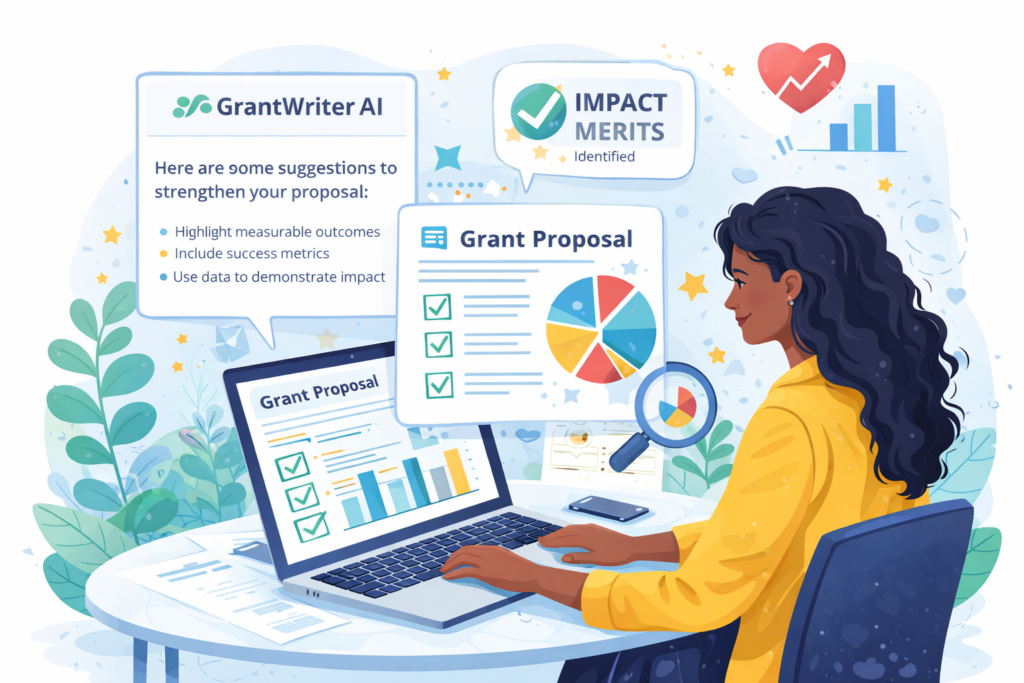
Strong programs deserve strong funding. Learning how to use impact metrics to strengthen every proposal bridges the gap between passion and proof. Metrics don’t diminish your mission—they clarify it. They make your impact visible, credible, and funder-ready.
You don’t need complex systems or perfect data. You need clear outcomes, realistic measures, and thoughtful integration. When impact metrics are used strategically, proposals become easier to evaluate, safer to fund, and more likely to win.
If you’re ready to streamline metric selection, align outcomes with donor priorities, and strengthen every proposal without added burden, modern AI-powered platforms now guide organizations step by step—making impact-driven grant writing accessible to everyone.
Boost your proposal volume, cut writing costs by up to 90%, and write in donor-preferred tone. Start your free trial at GrantWriterAI.com.
Frequently Asked Questions (FAQs)
1. What are impact metrics in grant writing?
They are measures that show what changed as a result of your program.
2. Do all funders require impact metrics?
Most do, especially for competitive or repeat funding.
3. Are outputs the same as outcomes?
No. Outputs show activity; outcomes show change.
4. What if we don’t have historical data?
Start with baselines and track progress going forward.
5. Can small organizations use impact metrics?
Yes. Simple metrics are often the most effective.
6. How many metrics should a proposal include?
Enough to show impact clearly—usually 3–6 key outcomes.
7. Should metrics be customized for each funder?
Yes, whenever possible.
8. Can stories replace metrics?
No. Stories should support metrics, not replace them.
9. How often should metrics be reported?
Follow funder guidelines; typically quarterly or annually.
10. What’s the fastest way to strengthen metrics in proposals?
Use donor-aligned, guided tools like GrantWriterAI to match outcomes, language, and reporting expectations.