
How to Organize Virtual Fundraising Events That Bring in Money
Virtual fundraising events can absolutely raise serious revenue, but only when they are built for the way people actually behave online. That is the challenge many nonprofits now face. Supporters are overloaded with Zoom links, livestreams, email appeals, and digital content. They are not necessarily unwilling to give. They are simply more selective about where they spend their attention.
That distinction matters.
Too many organizations assume digital fatigue means people no longer care about online experiences. In reality, fatigue often comes from repetitive, low-energy events that feel like long webinars with a donation button attached. Recent nonprofit commentary suggests that donor disengagement is often driven less by message frequency alone and more by whether communication feels meaningful, timely, and valuable. At the same time, sector benchmark data continues to show online fundraising remains important, with sustainer revenue growing and peer-to-peer participation driving strong event results.
So the question is not whether virtual fundraising events still work. The question is how to design virtual fundraising events that feel worth showing up for.
The answer starts with a mindset shift: stop thinking like a broadcaster and start thinking like a host.
Start With the Right Promise, Not the Right Platform

The biggest mistake in virtual fundraising events is beginning with software. Teams ask whether to use Zoom, YouTube, or a specialized event platform before they answer the more important question: why would someone attend live instead of ignoring the invitation?
Your event needs a promise that is specific, emotional, and easy to repeat. “Support our mission” is too broad. “Help fund 500 emergency meals in one evening” is clearer. “Join a 45-minute virtual concert where every ticket funds school supplies” is stronger because it combines purpose with experience.
Successful virtual fundraising events usually make one of these promises:
Offer a clear outcome
Supporters should know what their attendance or donation helps make possible. Vague fundraising language creates distance. Concrete outcomes create momentum.
Offer a reason to attend live
Live moments matter. That could be exclusive storytelling, a challenge goal, real-time donor shout-outs, a mini-auction, a performance, or a limited-time match. Without a live advantage, people will treat your event like optional content.
Offer emotional variety
People burn out when every online event feels identical. The most effective virtual fundraising events create movement. They mix story, interaction, urgency, and celebration rather than relying on one speaker talking over slides.
Build for Attention Spans, Not for Tradition
One reason digital fatigue hurts virtual fundraising events is that organizations often import the structure of in-person galas into online spaces. A format that works in a ballroom at 7 p.m. does not automatically work on a laptop after a long workday.
Virtual audiences need shorter segments, more participation, and clearer pacing.
Keep the event tighter than you think
A common reason people leave early is that the event takes too long to get to the point. In most cases, virtual fundraising events perform better when they are concise and tightly produced. That means cutting filler, limiting speeches, and designing the run-of-show around energy.
A strong virtual event often includes:
A fast opening
Open with emotion, not housekeeping. Lead with a powerful story, a bold statistic, or a compelling host statement that explains why this event matters tonight.
A visible fundraising goal

People give more confidently when they understand the target. A live fundraising thermometer or progress tracker can help create movement and shared purpose. Interactive fundraising tools and live updates are widely recommended in current virtual event guidance because they keep attendees connected to progress in real time.
Planned interaction every few minutes
Polls, chat prompts, quick donor recognition, short video clips, and breakout moments all help reduce passive viewing. Sector guidance on virtual events consistently recommends using live Q&A, polls, gamification, and breakout rooms to increase engagement.
Choose a Format That Fits Donor Energy
Not all virtual fundraising events should look like virtual galas. In fact, one of the smartest ways to beat digital fatigue is to choose a format that feels lighter, fresher, and easier to join.
Here are formats that often work well:
The virtual challenge event
Think walk, run, read-a-thon, push-up challenge, or community challenge tied to peer fundraising. This format works because supporters are not just watching. They are participating. Blackbaud benchmark data found peer-to-peer fundraising remained powerful, with nearly 6,400 fundraisers analyzed across three years generating over $1.1 billion, and 2022 revenue growing 23% as participation rose 29%.
The virtual concert or talent night
This works best when entertainment is paired with a strong cause connection and short giving moments. People are more likely to stay engaged when the event feels like a shared experience rather than a presentation.
The online auction or prize draw
Auction-based virtual fundraising events can create urgency naturally. Bidding activity, countdowns, and donor competition keep the event dynamic and reduce passive screen fatigue. Current nonprofit event guidance highlights online auctions and prize drawings as high-engagement digital revenue drivers.
The impact briefing with a twist
This format works well for major donors, recurring donors, or board networks. It is not a generic webinar. It is a curated experience with a beneficiary story, behind-the-scenes access, and one clear giving opportunity.
Make Participation Easier Than Attendance
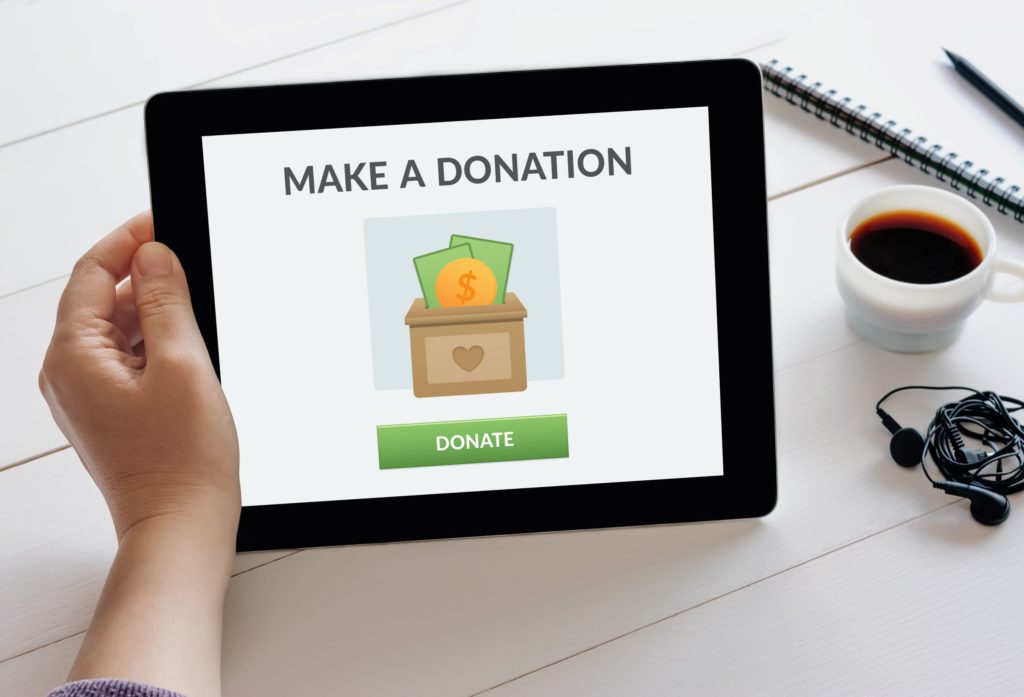
One overlooked truth about virtual fundraising events is that not every supporter wants to “attend” in the traditional sense. Some want to donate, comment, share, or fundraise without sitting through an hour-long livestream.
That means your event should have multiple lanes of participation:
Attend live
This is the core event experience.
Give instantly
Your donation page should be mobile-friendly, fast, and visible throughout the event.
Share with friends
Peer-to-peer fundraising expands reach by allowing supporters to create and share their own donation pages. Current guidance highlights this as an effective way to multiply visibility and revenue, especially in challenge-based campaigns.
Watch the highlights later
Not everyone can attend live, but post-event clips can still generate donations after the main program ends.
When virtual fundraising events are built this way, they stop depending on one single action from every supporter. That flexibility matters in a distracted digital environment.
Reduce Digital Fatigue by Increasing Relevance
Many nonprofits respond to digital fatigue by pulling back too far. They send fewer reminders, reduce outreach, and make softer asks. But current nonprofit commentary suggests the deeper issue is not simply over-communication. It is communication that lacks trust, freshness, and value. Blackbaud’s benchmark summary also notes click rates declined, which reinforces the need for content that is timely, interesting, and actionable.
For virtual fundraising events, that means:
Segment your invitations
Board members, monthly donors, volunteers, and first-time supporters should not all receive the exact same message.
Change the angle, not just the reminder date
Each email or social post should add a new reason to care: a speaker reveal, a donor match, a short impact story, a challenge update, or a testimonial.
Show people themselves in the event
GivingTuesday’s current guidance recommends featuring a mix of voices, including donors, volunteers, staff, and community members, because authentic peer validation is more compelling than generic graphics.
Build Revenue Into the Event From More Than One Direction

The strongest virtual fundraising events do not depend on one donation appeal at the end. They stack revenue streams.
Common revenue layers include ticket sales, sponsorships, direct donations, auctions, merchandise, and peer-to-peer fundraising. Current virtual event guidance also emphasizes offering multiple ticket tiers, sponsor visibility, real-time giving prompts, and supporter-led fundraising pages to expand returns.
That matters because digital fatigue can reduce response to any one ask. Multiple giving paths protect revenue.
Ticketing
Even low-cost tickets can increase commitment. A pay-what-you-can model may work well for broader audiences.
Sponsorship
Virtual fundraising events can be attractive to sponsors because branding extends beyond a room. Sponsors can appear in pre-event promotion, slides, digital programs, and replay content.
Live giving moments
Do not wait until the end. Place two or three clear giving moments throughout the program.
Recurring gift invitation
Recurring support is especially valuable. Blackbaud’s benchmark summary found median sustainer revenue grew 10.70%, and sustaining revenue’s share of all online revenue rose 14.64%. The report also states the annual value of a sustainer is four times greater than the average one-time donor.
That means some virtual fundraising events should not only ask for one-time gifts. They should invite supporters into monthly giving as part of the event experience.
Rehearsal Is a Fundraising Strategy
Virtual fundraising events often fail in small ways that become expensive. Audio delays, awkward transitions, weak lighting, confused hosts, and slow donation instructions all reduce trust. A sloppy event quietly tells donors your organization is not ready.
Run a full rehearsal with real timing. Test links, slides, scripts, transitions, microphones, lighting, chat moderation, backup internet, and donation flow.
Also assign clear roles. Current nonprofit virtual event guidance recommends dedicated responsibility across event management, promotion, technical support, and donor communication to prevent overload and improve execution.
Measure More Than the Money Raised
Of course revenue matters. But virtual fundraising events should also be measured by signals that improve the next campaign:
Attendance rate
How many registrants showed up?
Average watch time
When did people leave?
Conversion rate

How many attendees donated?
Peer shares
How often did supporters invite others?
Monthly donor conversions
Did the event create recurring support?
This matters because some virtual fundraising events are not just about one night of revenue. They are acquisition and retention tools. That is especially relevant now, as sector data continues to emphasize donor effectiveness, recurring giving, and supporter lifetime value.
Also read:How Text-to-Give Campaigns Raise More in Less Time
Wrap Up
The future of virtual fundraising events is not bigger broadcasts. It is better experiences.
People are tired of empty screen time, not meaningful connection. When virtual fundraising events are interactive, concise, emotionally varied, and easy to give through, they can still raise substantial money. They can also expand your reach, reduce overhead, activate peer networks, and turn occasional supporters into recurring donors. Virtual formats remain attractive because they lower venue and logistics costs while expanding access and participation options.
So if your last event felt flat, do not assume the channel is broken. More often, the format needs rethinking.
Design for attention. Give people a role. Create more than one way to participate. Make the mission concrete. And above all, remember that the best virtual fundraising events do not ask supporters to stare at a screen. They invite them into momentum.
FAQs
1. Do virtual fundraising events still work in 2026?
Yes. Virtual fundraising events still work when they are well-produced, interactive, and easy to give through. Current nonprofit benchmarks continue to show strong online fundraising value, especially through peer-to-peer participation and recurring giving.
2. What causes digital fatigue in online fundraising?
Digital fatigue usually comes from repetitive, passive, low-value experiences. It is often less about the existence of digital events and more about events that feel too long, too generic, or too transactional.
3. How long should virtual fundraising events be?
Many virtual fundraising events perform better when they are shorter than in-person events. Tight pacing, clear transitions, and frequent interaction usually matter more than length alone.
4. What is the best format for virtual fundraising events?
The best format depends on your audience, but challenge-based campaigns, auctions, concerts, and highly curated impact briefings often outperform passive webinar-style events.
5. How can we make virtual fundraising events more engaging?
Use live polls, chat prompts, donor shout-outs, breakout rooms, short videos, gamification, and visible progress tracking. These tactics are commonly recommended in current virtual event guidance.
6. Should virtual fundraising events include peer-to-peer fundraising?
Yes. Peer-to-peer fundraising can expand reach and revenue by letting supporters invite their own networks into the campaign. Current benchmark and practice guidance strongly support this approach.
7. How many donation asks should happen during the event?
Usually more than one. Virtual fundraising events are stronger when giving opportunities are woven throughout the experience instead of saved only for the end.
8. Are recurring donations a good fit for virtual fundraising events?
Absolutely. Recurring giving can be a strong event outcome, and current benchmark data shows sustainer revenue remains an important growth area for nonprofits.
9. What should we measure after virtual fundraising events?
Measure total revenue, attendance rate, average watch time, donation conversion rate, peer sharing, and recurring donor sign-ups.
10. What is the biggest mistake nonprofits make with virtual fundraising events?
The biggest mistake is treating virtual fundraising events like digital versions of long in-person programs. Online audiences need tighter pacing, stronger interaction, and a clearer reason to stay engaged.