How African NGOs Can Access International Funding Without Opening Offices Abroad
Many local organizations believe that winning African NGO grants from U.S. or EU donors requires registering a nonprofit in America or Europe.
That belief stops many serious NGOs before they even start.
The reality is more practical. You do not always need to register your NGO in the United States or European Union to receive international funding. But you do need the right structure, clear documents, trusted partners, and strong compliance systems.
In most cases, African NGO grants can be accessed through partnerships, subawards, fiscal sponsorships, consortiums, embassy small grants, intermediary funders, and donor-approved local structures.
This does not mean skipping rules. It means understanding how international funding actually flows.
For direct U.S. federal grants, organizations normally need SAM.gov registration and a Unique Entity ID before applying through Grants.gov. Grants.gov states that organizations applying for federal funding must use SAM.gov registration and add an organization profile using the Unique Entity ID.
For EU grants, applicants are usually expected to check eligibility, search the EU Funding & Tenders Portal, and register in systems such as PADOR where required.
So the real question is not, “Can we avoid every form of registration?”
The better question is:
How can African NGOs access African NGO grants without registering in the U.S. or EU?
That is what this guide explains.
What “Without Registration” Really Means

When African NGOs say they want grants “without registration,” they usually mean one of three things.
They do not want to register a U.S. 501(c)(3).
They do not want to open a European branch office.
They are not ready for complex donor portals like SAM.gov, PADOR, or the EU Funding & Tenders Portal.
This is completely understandable.
A women-led NGO in Kenya, a youth group in Uganda, a climate organization in Ghana, or a refugee support group in Ethiopia may already be legally registered at home. But opening an office abroad can be expensive, slow, and unnecessary.
Many African NGO grants do not require your organization to be registered in the donor’s country. What they require is proof that your organization is real, legal, accountable, and able to deliver results.
This means your local registration matters.
If your NGO is legally registered in your own country, has a bank account, keeps financial records, has a board, and can report on activities, you may already be closer to international funding than you think.
Direct Grants Are Possible, But They Are Not Always the Best First Step
Some African NGOs can apply directly for U.S. or EU grants.
But direct applications often come with heavier requirements.
For U.S. federal grants, direct applicants usually need SAM.gov registration, Grants.gov access, and a Unique Entity ID. Grants.gov notes that organizations must complete SAM registration before applying for most federal opportunities.
SAM.gov also explains that if an organization does not want to apply directly for awards, it may not need full registration and may only need a Unique Entity ID in some cases, such as certain subaward situations.
This is important.
It means that if your NGO wants to be the main applicant for a U.S. federal grant, registration requirements are usually stricter. But if your NGO is working as a subrecipient under another organization, the requirements may be different.
For EU funding, the European Commission explains that organizations should check the call guidelines carefully, confirm eligibility, and register in PADOR where required. PADOR is used to collect organizational information and help assess eligibility, operational capacity, and financial capacity for relevant calls.
So yes, direct African NGO grants are possible.
But for many local NGOs, direct grants should be the second or third step, not the first.
A smarter path is often to build experience through partnerships before becoming the lead applicant.
The Partnership Route: The Most Practical Way to Start

Partnerships are one of the strongest ways to access African NGO grants without registering abroad.
In this model, a larger organization applies for the grant as the lead applicant. Your NGO joins as a local implementing partner.
For example, a European nonprofit may apply for an education grant in Tanzania. A U.S.-based organization may apply for a health project in Malawi. A university may apply for a climate research project in Senegal.
These organizations often need local partners.
That local partner could be your NGO.
Your role may include:
Community Mobilization
You help reach the people the project is designed to serve.
Local Training
You run workshops, mentoring sessions, awareness meetings, or capacity-building activities.
Field Implementation
You deliver activities in schools, villages, health centers, refugee settlements, or urban communities.
Monitoring and Reporting
You collect attendance records, beneficiary feedback, photos, case studies, and field data.
Local Knowledge
You help the lead applicant understand the real context, risks, culture, language, and community dynamics.
This route is powerful because it helps your NGO build donor experience. You may not control the whole grant, but you gain proof that you can manage funds, deliver activities, and report professionally.
That proof becomes a bridge to bigger African NGO grants later.
Subawards: A Strong Entry Point for Local NGOs
A subaward is when a main grant recipient gives part of the grant to another organization to implement a specific part of the project.
This is common in international development.
For many local organizations, subawards are one of the best ways to access African NGO grants without registering in the U.S. or EU.
Here is how it works.
A large international NGO wins a grant from a donor. The project is too large for one organization to implement alone. The lead organization then selects local partners to handle certain activities.
Your NGO may receive a subaward to run community outreach, training, research, advocacy, service delivery, or local coordination.
This allows your organization to receive funding connected to a U.S. or EU donor without becoming the direct applicant.
But you still need to be ready.
A prime partner will usually review your systems before giving you money.
What Prime Partners Usually Look For
Prime partners want to reduce risk.
They need to know that your organization can manage donor funds responsibly.
Before approving your NGO for a subaward, they may ask for several documents.
Legal Documents
Your local registration certificate.
Your constitution or bylaws.
Your board list.
Your organizational chart.
Your tax identification documents, where applicable.
Financial Documents
Recent bank statements.
Financial policies.
Procurement procedures.
Annual budgets.
Audit reports, if available.
Payment approval processes.
Program Documents
Past project reports.
Photos of activities.
Beneficiary lists, where safe and appropriate.
Monitoring tools.
Community testimonials.
Partner recommendation letters.
Protection and Compliance Documents
Safeguarding policy.
Child protection policy, if working with children.
Anti-fraud policy.
Conflict-of-interest policy.
Data protection practices.
This is where many NGOs lose opportunities.
They are doing strong work, but their documents are scattered.
For African NGO grants, documentation is not decoration. It is evidence.
Donors and prime partners cannot fund what they cannot verify.
Fiscal Sponsorship: Helpful for Young or Informal Initiatives
Fiscal sponsorship is another route for accessing African NGO grants without U.S. or EU registration.
In this arrangement, a registered organization receives the funds on behalf of your project. Your team then implements the work under an agreement.
A fiscal sponsor could be:
A Larger Local NGO
This works well when your initiative is still growing and needs a trusted legal home.
A Faith-Based Organization
Churches, missions, or faith-based development organizations sometimes support community projects.
A University or Research Institution
This can work for education, public health, climate, or research-based projects.
A Diaspora Organization
African diaspora groups in the U.S. or Europe may support local projects through their existing legal structure.
An International Nonprofit
Some international nonprofits can host or sponsor local projects if the mission aligns.
Fiscal sponsorship can be useful, but it must be handled carefully.
You need a written agreement.
That agreement should explain who owns the project, who receives the money, who approves spending, what fees are charged, how reports are submitted, and what happens if the relationship ends.
Never rely on verbal promises.
A clear agreement protects your organization, your community, the sponsor, and the donor.
Consortiums: Join Bigger Applications Before Leading Your Own
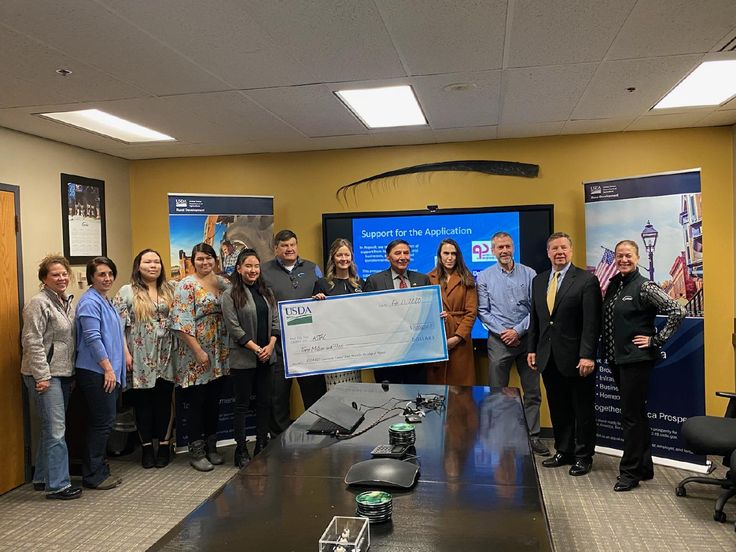
A consortium is a group of organizations applying together.
This is common in EU and international development funding.
One organization usually acts as the lead applicant. Other organizations join as co-applicants, affiliated entities, or implementing partners, depending on the donor rules.
For NGOs seeking African NGO grants, consortiums can be a powerful strategy.
They allow your organization to join larger opportunities that may be difficult to win alone.
Your NGO may bring:
Local Presence
You know the communities, languages, leaders, and local systems.
Technical Experience
You may specialize in education, health, agriculture, gender, youth, disability inclusion, or climate adaptation.
Trust
Communities may trust your organization more than an outside institution.
Implementation Capacity
You can deliver activities on the ground faster and more realistically.
The key is to position your NGO as a valuable partner before the deadline.
Do not wait until a call is published.
Start building relationships early with international NGOs, universities, foundations, and regional networks.
When a grant opportunity appears, trusted partners move faster.
Intermediary Funders: Often Easier Than Big Donor Portals
Not all African NGO grants come directly from large government portals.
Many U.S. and EU donors give money to intermediary organizations. These intermediaries then regrant funds to local NGOs.
This can be easier for smaller organizations.
Intermediary funders may include:
Women’s Funds
These support women-led and feminist organizations.
Human Rights Funds
These support civic space, legal empowerment, justice, and protection work.
Climate Funds
These support local climate adaptation, conservation, and environmental justice.
Community Foundations
These often support grassroots work in specific regions or countries.
Embassy Small Grants Programs
Many embassies offer smaller grants for local development, democracy, human rights, culture, education, or community projects.
International NGO Regranting Programs
Large NGOs sometimes distribute smaller grants to local partners.
The European Commission explains that NGOs can benefit from different EU funding opportunities, with some managed by EU countries and others by the Commission or EU bodies.
This matters because many NGOs focus only on the biggest donors.
But the best first grant is not always the largest grant.
The best first grant is the one your organization is ready to manage well.
Build a Donor-Ready NGO Profile
To win African NGO grants, your organization needs a donor-ready profile.
This is not a long document. It is a clear package that helps donors and partners understand who you are, what you do, and why they can trust you.
Your donor-ready profile should include:
A One-Page Organizational Profile
This should explain your mission, location, target communities, main programs, leadership, and contact details.
A Two-Page Concept Note
This should describe one project idea clearly: the problem, solution, activities, budget estimate, and expected results.
A Standard Budget Template
This helps you respond quickly when a donor asks for costs.
A Results Framework
This shows what you will measure and how you will track success.
Past Project Evidence
Include reports, photos, testimonials, activity summaries, and partner letters.
Governance Documents
Include your board list, registration certificate, constitution, and key policies.
A donor-ready NGO does not start looking for documents after an opportunity appears.
It prepares before the opportunity arrives.
This is how serious organizations win African NGO grants more consistently.
Improve Your Proposal Writing System
Many NGOs fail not because their work is weak, but because their proposals are unclear.
A good proposal should answer simple questions.
What problem are you solving?
Who is affected?
Why does it matter now?
What will your organization do?
Why is your organization the right one to do it?
How much will it cost?
How will you measure success?
What happens after the grant ends?
If your team writes every proposal from zero, you will waste time and burn out.
Instead, build reusable proposal sections.
Create a standard needs statement.
Create a strong organizational background.
Prepare common budget notes.
Develop reusable project activity descriptions.
Keep updated staff bios.
Save monitoring and evaluation language.
Prepare sustainability paragraphs.
This is where a grant writing assistant or proposal builder can help your team organize drafts faster. For example, GrantWriterAI is designed for grant proposal writing, proposal templates, and donor-aligned grant-writing workflows. It can support teams that want to increase proposal quality and volume without depending only on expensive consultants.
The goal is not to remove human judgment.
The goal is to help your team build a repeatable proposal system.
Strong African NGO grants are rarely won by panic writing. They are won through preparation, clarity, and consistency.
Choose the Right Grants Before You Apply
Not every grant is worth your time.
Some opportunities are too large.
Some require years of audited accounts.
Some require EU-based applicants.
Some require previous donor experience.
Some require co-funding.
Some require consortium partners.
Some require registration in specific donor systems.
Before applying for African NGO grants, read the eligibility section carefully.
The European Commission advises applicants to check whether their organization is eligible and read the grant guidelines before applying.
Use a simple scoring system.
Rate each opportunity from 1 to 5 on:
Mission Fit
Does this grant match your real work?
Country Eligibility
Is your country eligible?
Organization Eligibility
Can your type of NGO apply?
Budget Size
Can your organization manage the amount?
Deadline Readiness
Can you prepare a strong application before the deadline?
Partnership Potential
Do you need a lead partner, co-applicant, or fiscal sponsor?
Document Readiness
Do you already have the required documents?
If the score is low, do not force it.
A focused NGO does not apply for everything.
It applies where it has a real chance.
Local Registration Still Matters
The phrase “without registration” should not mean operating informally.
Most donors still want your NGO to be legally registered somewhere.
Local registration is important because it shows that your organization exists under national law. It helps you open a bank account, sign contracts, receive funds, hire staff, and report to authorities.
For African NGO grants, your local registration can be enough in many partnership or subaward situations.
You may not need a U.S. or EU entity.
But you do need a credible legal identity.
If your group is not yet registered locally, consider partnering with a registered organization while you prepare your own legal structure.
This allows you to build experience without pretending to be ready for direct donor funding.
Build Relationships Before Funding Calls Open
Many NGOs make the same mistake.
They only contact donors when they need money.
That is too late.
Relationships should begin before the call opens.
Join civil society networks.
Attend donor webinars.
Participate in local development meetings.
Follow embassy announcements.
Connect with international NGOs.
Share short updates about your work.
Ask potential partners what they look for in local organizations.
This is not begging.
It is positioning.
When a donor or prime partner needs a local organization, they often choose groups they already know or groups recommended by trusted networks.
Visibility matters.
For African NGO grants, relationships can open doors that cold applications cannot.
Common Mistakes That Block African NGO Grants

Applying Without Reading the Rules
Eligibility rules matter. If the donor says only certain organizations can apply, do not ignore that.
Using Weak Budgets
Your budget should connect clearly to your activities. Every cost should make sense.
Sending Generic Proposals
Donors can tell when a proposal has been copied and pasted. Customize each application.
Having No Evidence
Good work needs proof. Keep reports, photos, attendance records, case studies, and feedback.
Depending on One Big Grant
One application is not a strategy. A strong funding system includes many well-matched opportunities.
Ignoring Compliance
Safeguarding, financial controls, procurement, and reporting systems are not optional. They build trust.
A Simple 90-Day Plan for African NGOs
Days 1–30: Organize Your Documents
Collect your registration certificate, constitution, board list, bank details, project reports, photos, policies, and financial records.
Create a clean folder system.
Prepare your NGO profile and one concept note.
Days 31–60: Build Your Funding Map
List possible funders.
Include U.S. grants, EU grants, embassy grants, intermediary funds, local foundations, and international NGOs.
Separate them into direct grants, subawards, consortiums, and fiscal sponsorship opportunities.
Days 61–90: Start Outreach and Apply
Contact possible partners.
Send your NGO profile.
Ask about subaward opportunities.
Join funding webinars.
Submit smaller applications.
Improve your proposal templates.
This plan helps your organization move from confusion to structure.
And structure is what helps NGOs win African NGO grants over time.
🌍 A Smarter Way to Prepare for Grants as a Local African NGO
Not having U.S. or EU registration does not mean your organization cannot access funding. In many cases, the real barrier is not legitimacy — it is documentation, proposal readiness, and the ability to present your work clearly and professionally.
Many local organizations struggle because:
- They do not have the right proposal documents ready
- They are unsure how to package their work for funders
- They lack supporting tools like budgets, logframes, work plans, and reporting templates
- They spend too much time creating everything from scratch
If you want to pursue grants more confidently, you need a stronger documentation system — not just more effort.
✅ Start with the Free Grant Template
To help you take the first step, we’ve created a free template you can use to strengthen your grant preparation process and present your organization more clearly.
This free resource will help you:
- Organize your ideas more professionally
- Communicate your project clearly to funders
- Build a stronger starting point for grant applications
- Save time and reduce guesswork
👉 Download the free template here
🚀 Upgrade: Nonprofit Templates Bundle (37 Templates)
If you want a more complete system for grant readiness, proposal writing, planning, and reporting, get the Nonprofit Templates Bundle.
💡 What’s included:
- 5 concept note templates
- Full project proposal and grant report templates
- UN Logframe, Logical Framework Matrix, and Theory of Change templates
- USAID Monitoring & Evaluation Framework + M&E Plan
- Nonprofit budget, work plan, and project timeline templates
- Risk management, sustainability, and communication plan templates
- Stakeholder analysis, gender analysis, and environmental impact templates
- Executive summary and impact assessment templates
- Sponsorship proposal and event proposal templates
- Capacity building plan and partnership agreement templates
- 7 fiscally sponsored organization templates, including grant proposal, budget, agreement, narrative, financial reporting, donor letter, and progress report
👉 Get the full nonprofit templates bundle here
Why This Matters
Funders often support organizations that can clearly explain:
- What they do
- Why it matters
- How they will implement the work
- How they will measure and report results
With the right templates, you can:
- Present your organization more professionally
- Improve your grant readiness
- Save time on proposal development
- Build more confidence when applying for funding
You do not need foreign registration to become more fundable — but you do need the right tools.
Wrap Up: You Do Not Need Foreign Registration to Become Fundable
African NGOs do not always need U.S. or EU registration to access international funding.
But they do need trust.
They need local legal status, clean documents, financial controls, strong partnerships, and clear proposals.
The smartest path is usually not to start with the biggest direct grant.
Start with partnerships.
Start with subawards.
Start with fiscal sponsors where appropriate.
Start with intermediary funders.
Start with donor-ready documents.
Then grow toward direct applications when your systems are stronger.
Winning African NGO grants is not about shortcuts. It is about becoming easy to trust.
When your NGO can show real community work, clean records, strong leadership, and a clear plan, international funders are more likely to listen.
You do not need to look bigger than you are.
You need to look prepared, credible, and ready to deliver.
FAQs
1. Can African NGOs get grants without registering in the U.S. or EU?
Yes. Many African NGOs can access funding through partnerships, subawards, fiscal sponsors, consortiums, and intermediary funders without registering in the U.S. or EU.
2. What is the best focus keyword for this topic?
The best focus keyword is African NGO grants because it is short, relevant, and easy to use naturally throughout the article.
3. Do African NGOs need SAM.gov registration?
Only if they are applying directly for many U.S. federal grants. Some subaward situations may not require full SAM.gov registration, though requirements depend on the funder and award structure.
4. Do African NGOs need PADOR registration for EU grants?
For some EU calls, yes. The European Commission says applicants should register in PADOR where required and follow the call guidelines.
5. What is the easiest way to access African NGO grants?
For many smaller NGOs, the easiest starting point is a subaward, local partnership, embassy small grant, or intermediary funder.
6. Can an unregistered community group receive international funding?
Sometimes, but usually through a fiscal sponsor or registered partner. Most donors prefer working with legally recognized organizations.
7. What documents should an NGO prepare before applying?
Prepare your registration certificate, constitution, board list, bank details, financial policy, safeguarding policy, past reports, budget template, and organizational profile.
8. What is a subaward?
A subaward is funding given by a main grant recipient to another organization to implement part of a project.
9. Why do proposals fail?
Proposals often fail because they are unclear, generic, poorly budgeted, unsupported by evidence, or submitted to grants where the NGO is not eligible.
10. How can NGOs improve their chances of winning African NGO grants?
NGOs can improve their chances by building donor-ready documents, applying for well-matched opportunities, joining partnerships, improving proposal quality, and keeping strong evidence of past work.