
A practical guide for community leaders, founders, volunteers, and changemakers who want to raise money before registering a formal nonprofit
Many people delay their mission because they believe they must first register an NGO.
They wait for paperwork.
They wait for a board.
They wait for certificates.
They wait for the “perfect” structure.
Meanwhile, the problem they care about keeps growing.
Here is the truth: You Don’t Need an NGO to Start Fundraising.
You need a clear cause, a trustworthy plan, transparent money handling, and the right fundraising pathway for your stage. Registration can help later, especially when applying for large institutional grants or receiving tax-deductible donations. But it is not always the first step.
Across the world, many community projects begin informally. A teacher raises money for school supplies. A neighbor organizes emergency medical support. A youth group collects funds for a cleanup. A local founder tests a social impact idea before forming an organization.
The key is not whether you have an NGO on day one. The key is whether people trust you enough to give.
That is why You Don’t Need an NGO to Start Fundraising is more than a catchy phrase. It is a mindset shift. You can begin small, prove the need, document your results, and build toward a stronger structure over time.
Why people think they need an NGO first
Most people associate fundraising with registered charities, foundations, and large nonprofits. That makes sense. Formal organizations often have bank accounts, boards, policies, grant eligibility, and public credibility.
But the fundraising world is broader than that.
There are different types of giving:
Personal support
This happens when people give to an individual or family. Examples include medical bills, funeral costs, disaster recovery, tuition, or emergency food support.
Charity Navigator explains that personal fundraisers are often created by individuals for themselves or loved ones, usually through platforms such as GoFundMe. These are different from donations to registered charities.
Community fundraising
This happens when a group raises money for a local cause, even before becoming a registered organization. Examples include neighborhood cleanups, youth sports, food drives, menstrual health campaigns, school improvements, or emergency relief.
Fiscal sponsorship
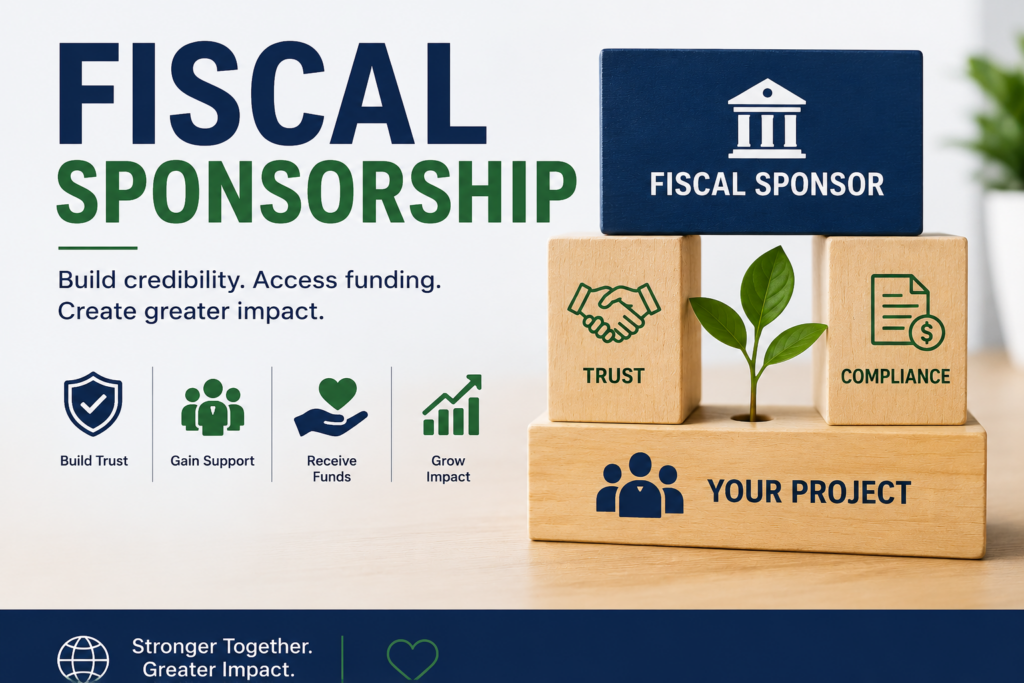
This is when an existing nonprofit receives and manages funds for a project that does not yet have its own tax-exempt status. The National Council of Nonprofits describes a fiscal sponsor as a nonprofit that provides fiduciary oversight, financial management, and administrative support for charitable projects.
Registered nonprofit fundraising
This is the traditional route. You create a legal entity, register it, follow reporting rules, and raise money under that organization’s name.
Each route has a place. The mistake is assuming only the last one counts.
The real question is not “Do I have an NGO?”
The better question is:
Can donors clearly understand where the money is going?
A donor does not only give to paperwork. A donor gives to trust.
That trust comes from simple things:
Clear purpose.
Clear budget.
Clear updates.
Clear proof.
Clear accountability.
This is why You Don’t Need an NGO to Start Fundraising when your first goal is to mobilize a small group of supporters around a clear and urgent need.
For example, imagine a community leader wants to raise $800 to buy school uniforms for 20 children. They may not need to create an NGO first. They need to show:
- Who the children are, while protecting privacy
- Why uniforms matter
- How much each uniform costs
- Who will buy them
- When they will be delivered
- How donors will see proof
That is fundraising.
It may be small, but it is real.
What you can do before registering an NGO
Before creating a formal organization, you can do several important things.
1. Define one specific fundraising goal

Do not start with “We want to help the community.”
That is too broad.
Start with something concrete:
“We are raising $1,500 to provide 100 reusable sanitary kits to girls in three rural schools.”
This kind of goal works because donors can picture the result.
A strong fundraising goal includes:
- The amount needed
- The people helped
- The problem being solved
- The timeline
- The evidence you will share
This is one reason You Don’t Need an NGO to Start Fundraising. You can start by proving that people care about one specific problem.
2. Create a simple budget
Donors do not need a 40-page financial report at the beginning. But they do need clarity.
A simple budget could look like this:
- 100 sanitary kits: $1,000
- Transport: $150
- Volunteer lunch and water: $80
- Printing and awareness materials: $120
- Emergency buffer: $150
Total: $1,500
This gives donors confidence. It also helps you avoid confusion later.
3. Choose the right money collection method
This is where you must be careful.
You may be able to collect funds through:
- Mobile money
- Bank transfer
- Crowdfunding platform
- Church or community group
- School committee
- Fiscal sponsor
- Registered partner organization
The best option depends on your country, the amount raised, the donor type, and whether donors need tax receipts.
In the United States, the IRS notes that crowdfunding can be used to raise money for business, charitable donations, or gifts, but the tax treatment depends on the facts and circumstances. Good recordkeeping matters.
That lesson applies broadly: keep records from the beginning, even when the fundraiser is small.
4. Use a fiscal sponsor when donors need formal credibility

Sometimes donors will not give to an individual. They want a recognized organization to receive the funds.
That does not mean your project must stop.
A fiscal sponsor can help.
Under fiscal sponsorship, a registered nonprofit receives donations or grants for your project and manages the funds under an agreement. GoFundMe’s help center explains that a fiscal sponsor can collect funds raised on your behalf, then distribute them according to a predetermined agreement.
This is one of the strongest reasons You Don’t Need an NGO to Start Fundraising. You can partner with an existing nonprofit while you build your own structure.
5. Document everything
Documentation is your early credibility system.
Keep:
- Donation records
- Receipts
- Photos
- Beneficiary counts
- Delivery notes
- Volunteer lists
- Before-and-after updates
- Thank-you messages
- Lessons learned
This becomes useful later when you want to register an NGO, approach larger donors, or apply for grants.
Many founders want funding first and documentation later. Reverse that. Document from the first dollar.
When fundraising without an NGO makes sense
Fundraising without an NGO is not always the right choice. But it makes sense in several situations.
You are testing an idea
Maybe you are not sure whether your project will work.
For example, you want to test a weekend reading club for children. You may not need to register an NGO before running a three-month pilot.
Raise a small amount. Test the idea. Measure attendance. Collect parent feedback. Share results.
If the pilot works, then you can build a formal structure.
You are responding to an emergency
Emergencies move faster than paperwork.
A family loses their home. A patient needs urgent treatment. Floods destroy school materials. A community needs food after displacement.
In these moments, people often give because they know the organizer and trust the need.
That is why You Don’t Need an NGO to Start Fundraising for every urgent response. But you do need transparency, especially when emotions are high.
You are building a community movement

Some movements begin with people, not institutions.
A youth climate group.
A mothers’ savings circle.
A village education committee.
A volunteer street-cleaning team.
These groups can raise small amounts from members, neighbors, and local businesses before becoming formal.
The structure should grow with the mission, not block it.
You are not ready for institutional grants
Large grants often require formal registration, audited accounts, governance documents, and compliance systems.
But early fundraising does not have to start with large grants.
Start with:
- Friends and family
- Community members
- Local businesses
- Faith groups
- Diaspora supporters
- Small online donors
- In-kind donations
When you prove traction, you become more attractive to bigger funders.
What you must be careful about
The idea that You Don’t Need an NGO to Start Fundraising does not mean you can ignore rules.
It means you should start wisely.
Tax rules may apply
If you collect money personally, it may not automatically count as charitable income. Depending on your country, the funds could be treated as gifts, income, or taxable receipts.
In the U.S., the IRS says money raised through crowdfunding may be taxable depending on the circumstances.
So do not casually tell donors that their gifts are tax-deductible unless you are using a qualified nonprofit or approved structure.
Donor receipts may be limited
If you are not registered, you may not be able to issue official charitable receipts.
That matters for corporate donors, foundations, and high-net-worth donors. Some will only give through a registered charity or fiscal sponsor.
This is why fiscal sponsorship can be powerful. The sponsor provides a legal and financial structure while your project continues operating.
Public fundraising laws vary
Some places require registration or permission before soliciting donations from the public, especially at scale.
Do not assume that because your cause is good, all fundraising methods are allowed. Check local rules, especially if you are raising large amounts, using paid ads, collecting door-to-door donations, or fundraising across borders.
Trust can disappear quickly
When you fundraise informally, trust is your main asset.
Lose it once, and it is hard to recover.
Avoid vague updates like:
“We helped many people. Thank you.”
Instead, say:
“Your support helped us purchase 75 food packages. Each package included maize flour, beans, cooking oil, salt, and soap. Distribution took place on Saturday at St. Mark Community Hall. We have attached receipts and photos.”
Specificity builds trust.
How to fundraise without an NGO step by step
Here is a simple path.
Step 1: Write a one-page cause brief
Your cause brief should answer:
- What problem are you solving?
- Who is affected?
- Why now?
- How much money is needed?
- What will the money buy?
- Who is responsible?
- How will results be shared?
This one-page document helps you communicate clearly.
Step 2: Start with your closest circle
Your first donors are usually people who already trust you.
Start with:
- Friends
- Family
- Colleagues
- Former classmates
- Church or mosque members
- Local business owners
- Community leaders
- Diaspora contacts
Do not begin by asking strangers. Begin with trust.
Step 3: Ask for specific amounts
Weak ask:
“Please support our cause.”
Stronger ask:
“Would you consider giving $25 to help provide learning materials for one child?”
Specific amounts reduce confusion. They help donors act.
Step 4: Make giving easy

People should not struggle to support you.
Provide:
- Payment details
- Deadline
- Contact person
- Short explanation
- Proof of legitimacy
- Update plan
The easier it is to give, the more likely people are to complete the donation.
Step 5: Share progress publicly
Do not wait until the fundraiser ends.
Share progress:
- “We have raised 40%.”
- “The first 30 kits have been purchased.”
- “Distribution is scheduled for Friday.”
- “Here are the receipts so far.”
People give when they see movement. Progress attracts more progress.
This is another reason You Don’t Need an NGO to Start Fundraising. Early momentum can come from visible action, not formal branding.
Step 6: Report back after the fundraiser
After the activity, share a simple report.
Include:
- Total amount raised
- Total amount spent
- Balance remaining
- Receipts or summary
- Number of people served
- Photos or testimonials
- Lessons learned
- Next step
This report becomes the foundation for your next fundraiser.
What to say to donors when you are not registered
Be honest.
Do not pretend to be an NGO. Do not use official-sounding language that creates confusion.
You can say:
“We are a community-led initiative, not yet a registered NGO.”
That sentence is clear. It builds trust.
Then explain how money will be handled.
For example:
“We are raising funds as a community-led initiative. Contributions will be received through our project treasurer, recorded in a shared tracker, and reported publicly after distribution. We are currently exploring fiscal sponsorship for future larger campaigns.”
This shows maturity.
You can also say:
“We are not issuing tax-deductible receipts at this stage.”
That protects both you and donors.
When you should consider registering an NGO

At some point, registration may become necessary.
Consider registering when:
- You are raising larger amounts
- You want to apply for institutional grants
- You need a formal bank account
- You are hiring staff
- You are signing contracts
- You need legal protection
- Donors require official receipts
- Your activities are ongoing, not one-time
The point is not to avoid registration forever. The point is to avoid letting registration delay action.
You Don’t Need an NGO to Start Fundraising, but you may need one to scale responsibly.
That difference matters.
The smarter path: start informal, build formal
A strong community project often grows in stages.
Stage 1: Personal credibility
People give because they trust you.
Stage 2: Community proof
People give because they see results.
Stage 3: Partner credibility
People give because a church, school, nonprofit, or fiscal sponsor stands with you.
Stage 4: Institutional structure
People give because you have governance, systems, reports, and legal registration.
This is a healthier path than rushing to create an NGO with no supporters, no programs, and no funding history.
A certificate does not create impact. Action does.
Common fundraising options before NGO registration
Crowdfunding
Platforms can help you reach friends, family, and online supporters. But understand the difference between personal fundraisers and charity fundraisers. GoFundMe distinguishes between fundraiser types, including nonprofit fundraisers connected to eligible nonprofits.
Community events
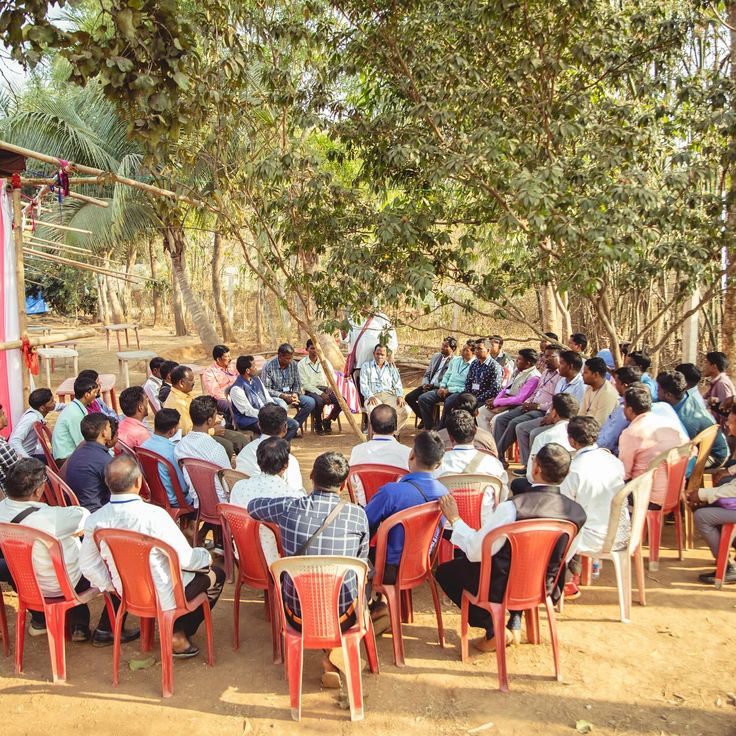
You can organize dinners, walks, cleanups, concerts, auctions, or sports days. These work well when the cause is local and visible.
In-kind donations
Sometimes you do not need cash.
You may need:
- Food
- Clothes
- Books
- Laptops
- Venue space
- Transport
- Printing
- Volunteer time
In-kind support can be easier to get than money.
Business sponsorship
Local businesses may support a project if it aligns with their values and community presence.
Ask for specific support:
“Would your shop sponsor 20 school bags?”
That is clearer than:
“Can you support our organization?”
Fiscal sponsorship
For larger campaigns, a fiscal sponsor can help you receive funds with stronger oversight. The National Council of Nonprofits emphasizes that fiscal sponsors must maintain control over donated funds as part of a legitimate arrangement.
Why this approach builds stronger organizations later
When you start fundraising before forming an NGO, you learn what actually works.
You learn:
- Which message moves people
- Which donors respond
- Which problem feels urgent
- How much people are willing to give
- What proof donors expect
- Whether your team can execute
- Whether the community truly wants the project
That knowledge is valuable.
Many registered NGOs struggle because they were built around paperwork, not demand. They have a name, logo, and constitution, but no donor base.
A better path is to build proof first.
That is why You Don’t Need an NGO to Start Fundraising can be a powerful lesson for early-stage changemakers. Fundraising is not only about money. It is about learning, trust, communication, and delivery.
A simple example
Imagine Amina wants to help girls stay in school during their menstrual cycle.
She has no NGO.
Instead of waiting, she does this:
Month 1: Small fundraiser
She raises $300 from friends and buys dignity kits for 25 girls.
Month 2: Documentation
She collects receipts, school confirmation, photos of packed kits, and feedback from teachers.
Month 3: Community expansion
She shares the results and raises $1,200 for three schools.
Month 4: Partnership
A local women’s organization agrees to act as a partner for future campaigns.
Month 6: Registration decision
Now Amina has proof, supporters, a budget history, and a clearer mission.
If she registers an NGO later, it will not be an empty shell. It will be built on real work.
The message donors need to hear
Donors do not need perfection.
They need confidence.
Tell them:
- What the problem is
- Why it matters now
- What their gift will do
- Who is managing the money
- How you will report back
This is the heart of fundraising.
And this is why You Don’t Need an NGO to Start Fundraising when your mission is clear and your process is honest.
Also read:How Long Should You Stay Under Fiscal Sponsorship? A Smart Exit-or-Stay Guide for Nonprofits
🌍 You Don’t Need an NGO to Start Fundraising — But You Do Need the Right Documents
A lot of people delay fundraising because they assume they need a fully registered NGO before anyone will take them seriously.
But in many cases, what matters first is not registration — it is whether you can clearly explain:
- What your project does
- Why it matters
- How support will be used
- What impact the funding will create
If your idea is strong but your documentation is weak, fundraising feels harder than it needs to be. But when your project is clearly presented, it becomes much easier to start conversations with donors, partners, and supporters.
✅ Start with the Free Proposal Template
To help you take the first step, we’ve created a free proposal template you can use to present your project more clearly and professionally.
This free resource will help you:
- Organize your project idea more effectively
- Communicate your vision in a stronger way
- Build a more credible case for support
- Start fundraising conversations with greater confidence
👉 Download the free proposal template here
🚀 Upgrade: Nonprofit Templates Bundle (37 Templates)
If you want a more complete system for fundraising, planning, proposals, reporting, and donor communication, get the Nonprofit Templates Bundle.
💡 What’s included:
- 5 concept note templates
- Full project proposal and grant report templates
- UN Logframe, Logical Framework Matrix, and Theory of Change templates
- USAID Monitoring & Evaluation Framework + M&E Plan
- Nonprofit budget, work plan, and project timeline templates
- Risk management, sustainability, and communication plan templates
- Stakeholder analysis, gender analysis, and environmental impact templates
- Executive summary and impact assessment templates
- Sponsorship proposal and event proposal templates
- Capacity building plan and partnership agreement templates
- 7 fiscally sponsored organization templates, including grant proposal, budget, agreement, narrative, financial reporting, donor letter, and progress report
👉 Get the full nonprofit templates bundle here
💡 Why This Matters
You may not have formal NGO registration yet, but you can still build real fundraising momentum when you have:
- A clear proposal
- A professional way to present your work
- Stronger planning and budgeting tools
- Better systems for donor communication and accountability
Fundraising often starts with clarity before it starts with compliance. The right templates can help you move forward now — while building toward bigger opportunities later.
Wrap up: Start with trust, then build the structure
You do not need to wait for an NGO certificate before helping people.
You can begin with one project.
One budget.
One honest ask.
One clear report.
One circle of supporters.
Then you grow.
Register when the mission needs it. Use a fiscal sponsor when donors need formal assurance. Partner when it creates trust. Keep records from the start.
The big lesson is simple: You Don’t Need an NGO to Start Fundraising. You need clarity, integrity, action, and accountability.
A formal organization can help you scale. But your first fundraiser can start with a real problem, a trusted organizer, and a community willing to act.
FAQs
1. Do I legally need an NGO to raise money?
Not always. Many people raise money for personal, community, or emergency causes without having an NGO. However, laws vary by country and region, so you should check local fundraising, tax, and public solicitation rules before raising larger amounts.
2. Can I collect donations through my personal bank account?
You can in some situations, but it is not ideal for long-term fundraising. A personal account can create confusion around taxes, ownership, and accountability. Keep records, separate project funds where possible, and consider a partner organization or fiscal sponsor as you grow.
3. Can I tell donors their gifts are tax-deductible?
Only if donations are made through a qualified structure that can legally issue tax-deductible receipts. Do not promise tax benefits if you are fundraising personally or informally.
4. What is a fiscal sponsor?
A fiscal sponsor is an existing nonprofit that receives and manages funds for a project that does not yet have its own nonprofit status. It can provide financial oversight, administrative support, and donor confidence.
5. Is crowdfunding a good option before registering an NGO?
Yes, crowdfunding can work well for urgent, personal, or community-based causes. But choose the right fundraiser type and explain clearly whether the campaign is personal, community-led, or connected to a registered nonprofit.
6. How do I build trust without NGO registration?
Use a clear budget, public updates, receipts, photos, delivery records, and honest communication. Trust grows when donors can see where their money went.
7. When should I register an NGO?
Register when your work becomes ongoing, your funding grows, you need a formal bank account, you want to apply for grants, or donors require legal status and official receipts.
8. Can businesses support me if I do not have an NGO?
Yes, some local businesses may support community projects through cash, products, venue space, transport, or services. Larger companies may require formal registration or a nonprofit partner.
9. What is the biggest mistake people make when fundraising without an NGO?
The biggest mistake is being vague. Donors need to know the exact goal, amount, timeline, responsible person, and reporting plan.
10. Why is “You Don’t Need an NGO to Start Fundraising” important?
Because many good projects never begin. You Don’t Need an NGO to Start Fundraising reminds changemakers that action can start small. Build trust first, prove impact, and create formal structures when the work is ready to grow.