Starting a nonprofit project can feel overwhelming.
You may have a powerful mission, a passionate team, and a real solution to a community problem — but donors often hesitate when they see one major issue:
You are not yet an established NGO.
Many grassroots organizations, youth-led initiatives, community projects, and early-stage nonprofits struggle to access funding simply because they lack legal status, donor credibility, or operational history.
This is where fiscal sponsorship becomes a game changer.
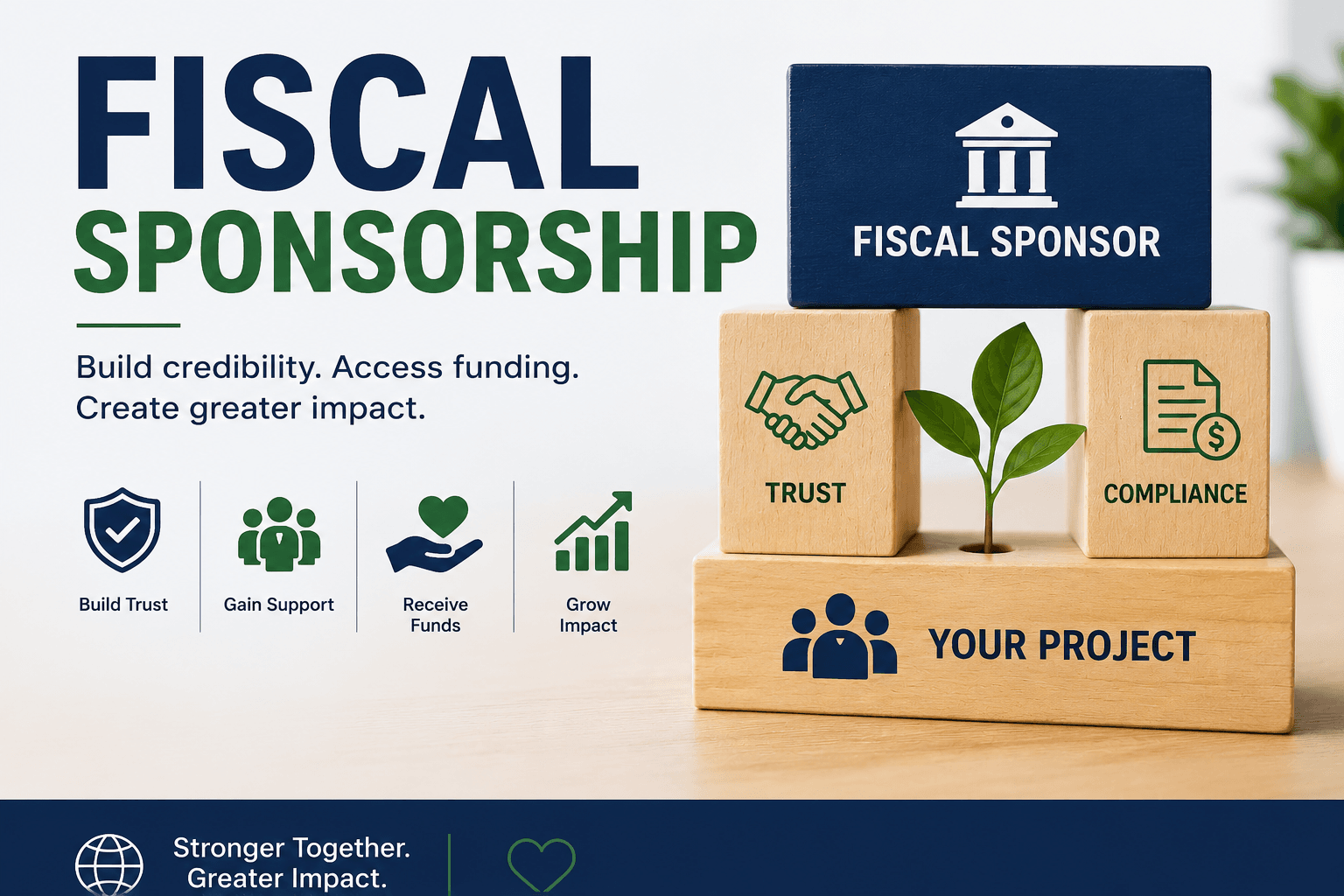
Fiscal sponsorship allows smaller projects to operate under the legal and financial umbrella of an already registered nonprofit organization. It gives emerging initiatives the ability to receive grants, donations, and institutional support without waiting years to build credibility.
In simple terms, fiscal sponsorship helps you look and operate like an established NGO while focusing on your mission.
In this guide, you will learn:
- What fiscal sponsorship is
- How it works
- Why donors trust fiscally sponsored projects
- How to use fiscal sponsorship strategically
- Mistakes to avoid
- How to position your project professionally
- Tools and resources to help you grow faster
By the end, you will understand how fiscal sponsorship can help your organization access more opportunities and build donor confidence much earlier.
What Is Fiscal Sponsorship?
It is a formal arrangement where an established nonprofit organization agrees to support another project or initiative.
The sponsoring organization typically provides:
- Legal status
- Financial oversight
- Donation processing
- Grant management
- Compliance support
- Administrative infrastructure
This allows smaller projects to legally receive tax-deductible donations and apply for grants under the sponsor’s nonprofit status.
For many grassroots initiatives, it is the fastest path to legitimacy.
Instead of waiting months or years to register a nonprofit, build systems, and establish trust, you can immediately begin operating with institutional backing.
Why Fiscal Sponsorship Matters for New Nonprofits
Most donors want to reduce risk.
When funders review proposals, they often ask:
- Is this organization legally registered?
- Can they manage funds responsibly?
- Do they have financial oversight?
- Are they accountable?
- Can they deliver results?
New organizations usually struggle to answer these questions convincingly.
This is why it matters.
When your project operates under a recognized nonprofit sponsor, donors immediately see:
- Structure
- Accountability
- Financial management
- Governance support
- Reduced operational risk
This creates trust much faster.
In many cases, it can help a small project compete for opportunities that would normally only go to established NGOs.
How Fiscal Sponsorship Helps You Look Established
1. You Gain Institutional Credibility

A fiscally sponsored project can leverage the sponsor’s reputation and legal standing.
This helps your project appear more stable and organized.
Instead of saying:
“We are an informal community group.”
You can say:
“We operate under fiscal sponsorship through a registered nonprofit organization.”
That single sentence changes how many donors perceive your project.
2. You Can Receive Grants Immediately
Many grants require applicants to have nonprofit status.
Without fiscal sponsorship, you may be automatically disqualified.
With the right sponsor, you can:
- Apply for grants
- Receive donor funding
- Access institutional partnerships
- Process tax-deductible donations
This accelerates your growth significantly.
3. Donors Feel Safer Funding You
Donors want transparency.
Fiscal sponsors usually provide:
- Financial oversight
- Reporting systems
- Fund management
- Compliance monitoring
This reduces donor fear.
As a result, fiscal sponsorship often improves fundraising outcomes.
4. You Can Focus on Your Mission
Building nonprofit infrastructure takes time.
Fiscal sponsorship allows you to focus on:
- Program delivery
- Community impact
- Fundraising
- Partnerships
- Storytelling
Instead of spending all your energy on administration.
Also Read: How Fiscal Sponsorship Opens the Door to Global Funding
Types of Fiscal Sponsorship

Not all arrangements are the same.
Here are the most common models.
Comprehensive Fiscal Sponsorship
The sponsor fully owns and manages the project legally and financially.
This model works well for:
- Early-stage initiatives
- Pilot programs
- Community campaigns
Pre-Approved Grant Relationship
The project remains independent but receives grants through the sponsor.
This model gives more operational independence.
How to Find the Right Fiscal Sponsor
Choosing the wrong sponsor can create major problems.
Look for organizations that:
- Align with your mission
- Have strong financial systems
- Understand grant compliance
- Communicate clearly
- Have a positive reputation
Before agreeing to any fiscal sponsorship arrangement, ask:
- What fees do they charge?
- What reporting is required?
- Who owns project assets?
- How are funds managed?
- What happens if the relationship ends?
Strong partnerships create long-term stability.
How to Position Your Project Professionally

Fiscal sponsorship alone is not enough.
You also need professional communication materials.
This includes:
- Donor explanation letters
- Project summaries
- Budgets
- Proposal templates
- Impact reports
One powerful strategy is creating a simple donor-facing explanation document that clearly explains:
- Your mission
- Your partnership structure
- Why fiscal sponsorship is being used
- How donor funds are protected
This reduces confusion and builds trust faster.
👉 Free Resource: Donor Explanation Letter
Use this customizable donor explanation letter to professionally explain your fiscal sponsorship structure to donors and grantmakers.
Common Fiscal Sponsorship Mistakes to Avoid
Choosing a Sponsor Based Only on Cost
Cheap is not always better.
A weak sponsor can damage donor confidence.
Choose experience and reliability over low fees.
Ignoring Written Agreements
Always use formal agreements.
Clear documentation protects both parties.
Failing to Build Your Own Brand
Even under fiscal sponsorship, your project still needs:
- A website
- A mission statement
- Clear impact messaging
- Donor communication systems
Your sponsor supports you — but your identity still matters.
Depending Entirely on One Funding Source
Fiscal sponsorship helps you access funding, but sustainability still requires diversification.
Build multiple funding streams over time.
How Fiscal Sponsorship Can Accelerate Growth

Many successful nonprofits started under fiscal sponsorship.
Why?
Because it allows organizations to:
- Test ideas quickly
- Build donor relationships
- Establish operational systems
- Gain credibility faster
- Learn fundraising before formal registration
This creates momentum.
Instead of waiting for “perfect conditions,” organizations can start creating impact immediately.
Build Better Funding Systems Early
One major mistake early nonprofits make is treating fundraising as random.
Successful organizations build repeatable systems.
That includes:
- Proposal templates
- Donor communication workflows
- Grant tracking systems
- Reporting structures
- Fundraising calendars
The earlier you build these systems, the easier scaling becomes.
If you need ready-to-use nonprofit tools, templates, and fundraising materials, this bundle can help simplify the process:
👉 Paid Resource: Nonprofit Bundle ($5.99)
Includes practical nonprofit templates, donor tools, and fundraising resources designed for grassroots organizations and emerging NGOs.
Bonus: Start With a Strong Grant Proposal
Even with fiscal sponsorship, strong proposals still matter.
A professionally structured grant proposal increases donor confidence and improves your chances of funding.
If you are preparing your first proposal, this free template can help you organize your ideas clearly and professionally.
👉 Free Grant Proposal Template
Download the free template here.
For teams handling multiple proposals, tools like GrantWriterAI can also help streamline proposal development workflows and reduce the administrative burden often faced by small nonprofits.
Developed alongside contributors from Grassroots Digital Impact Africa (GDIA), Stanford-affiliated collaborators, UN experts, and former OpenAI contributors, the platform helps organizations structure stronger proposals more efficiently.
Learn more here.
Fiscal sponsorship is more than a legal arrangement.
It is a strategic growth tool.
For emerging nonprofits, community initiatives, and grassroots organizations, fiscal sponsorship creates an opportunity to build credibility, access funding, and operate more professionally from the beginning.
The key is using it intentionally.
When combined with strong communication, organized systems, and donor trust-building strategies, fiscal sponsorship can dramatically accelerate your nonprofit journey.
You do not need to wait years to appear credible.
You need structure, clarity, and the willingness to start.
FAQs
1. What is fiscal sponsorship?
It is an arrangement where a registered nonprofit supports another project by providing legal and financial oversight.
2. Is fiscal sponsorship legal?
Yes. It is a widely used and legally recognized nonprofit structure in many countries.
3. Can fiscally sponsored projects apply for grants?
Yes. Many fiscally sponsored projects can legally apply for grants through their sponsoring organization.
4. Do donors trust fiscally sponsored organizations?
Yes. Donors often feel more confident funding projects with established nonprofit oversight.
5. How much do fiscal sponsors charge?
Most fiscal sponsors charge administrative fees ranging from 5% to 15% depending on services provided.
6. Can fiscal sponsorship replace nonprofit registration permanently?
Sometimes, but many projects eventually transition into independent nonprofits.
7. What documents do fiscally sponsored projects need?
Common documents include budgets, donor letters, proposals, agreements, and impact reports.
8. Is fiscal sponsorship good for startups?
Yes. It is especially useful for early-stage nonprofit projects and grassroots initiatives.
9. How do I explain fiscal sponsorship to donors?
Use a clear donor explanation letter that outlines the relationship, oversight structure, and financial accountability.
10. Can international organizations use fiscal sponsorship?
Yes. Many international projects use it to access funding and donor support.