Volunteerism
Your organization may need skills more than it needs another employee.
GDIA helps nonprofits, churches, schools, and grassroots organizations learn how to attract, onboard, manage, and retain both in-person volunteers and e-volunteers who can contribute skills from anywhere.
Start Building Your Volunteer Program Explore Free ResourcesMoney is not the only resource your mission needs.
A small organization may not be able to hire a grant researcher, designer, translator, communications specialist, data analyst, or administrator. But the right volunteer may already have those skills and be willing to contribute them.
E-volunteering removes geography from the equation.
An e-volunteer can support your organization remotely from another town, another country, or another continent. This can help grassroots organizations access skills that may not be available locally.
What GDIA helps your organization learn
The goal is not to collect as many volunteers as possible. It is to build a simple system that helps the right people contribute meaningful work and gives them a reason to stay.
1. Identify what you actually need
Turn your staffing and skills gaps into clear volunteer roles instead of vague requests for “help.”
2. Write better volunteer opportunities
Create clear roles with responsibilities, time expectations, skills needed, and useful outcomes.
3. Find the right people
Learn how to recruit through LinkedIn, X, professional networks, universities, communities, and online volunteer channels.
4. Onboard volunteers properly
Set expectations early, explain the mission, define deliverables, and give volunteers the information they need to succeed.
5. Manage remote contributors
Use simple communication routines, deadlines, shared documents, and feedback so e-volunteers know what is expected.
6. Retain good volunteers
Recognition, meaningful work, feedback, trust, and clear communication are often more important than constantly recruiting new people.
Start with a role—not a recruitment post.
Before asking people to volunteer, answer four questions: What problem will this person help solve? What will they actually do? How much time is required? Who will support and supervise them?
Clear expectations make it easier for the right person to say yes—and easier for your organization to keep them engaged.
Free Books for Building a Healthy Volunteer Program
These practical books are designed to help nonprofits and churches attract, manage, and retain volunteers without exploiting people or creating unhealthy expectations.
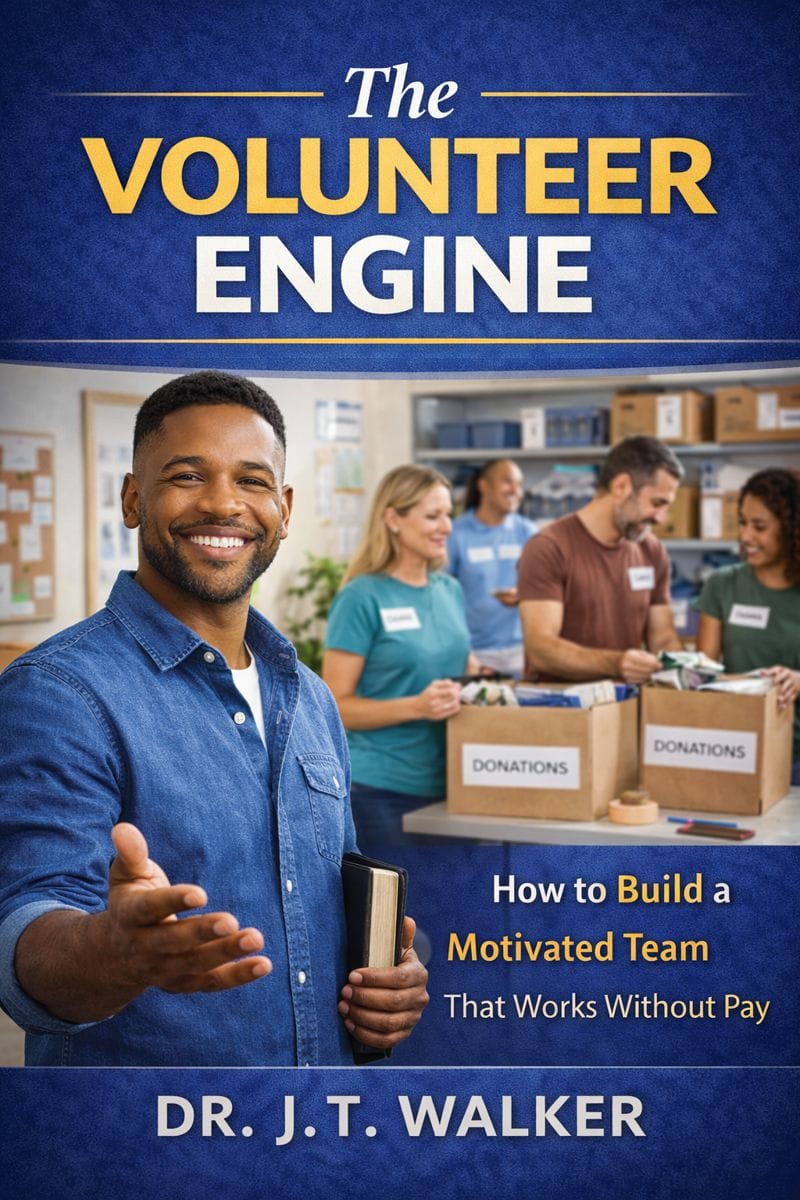
The Volunteer Engine
Build a repeatable volunteer system that helps your organization recruit, onboard, communicate with, and retain the right people.

No Missionaries No Problem
Learn how remote and e-volunteers can support your mission with skills, time, and professional expertise from anywhere.

No Staff No Problem
Practical ideas for small nonprofits that need extra capacity but cannot yet afford a large paid team.
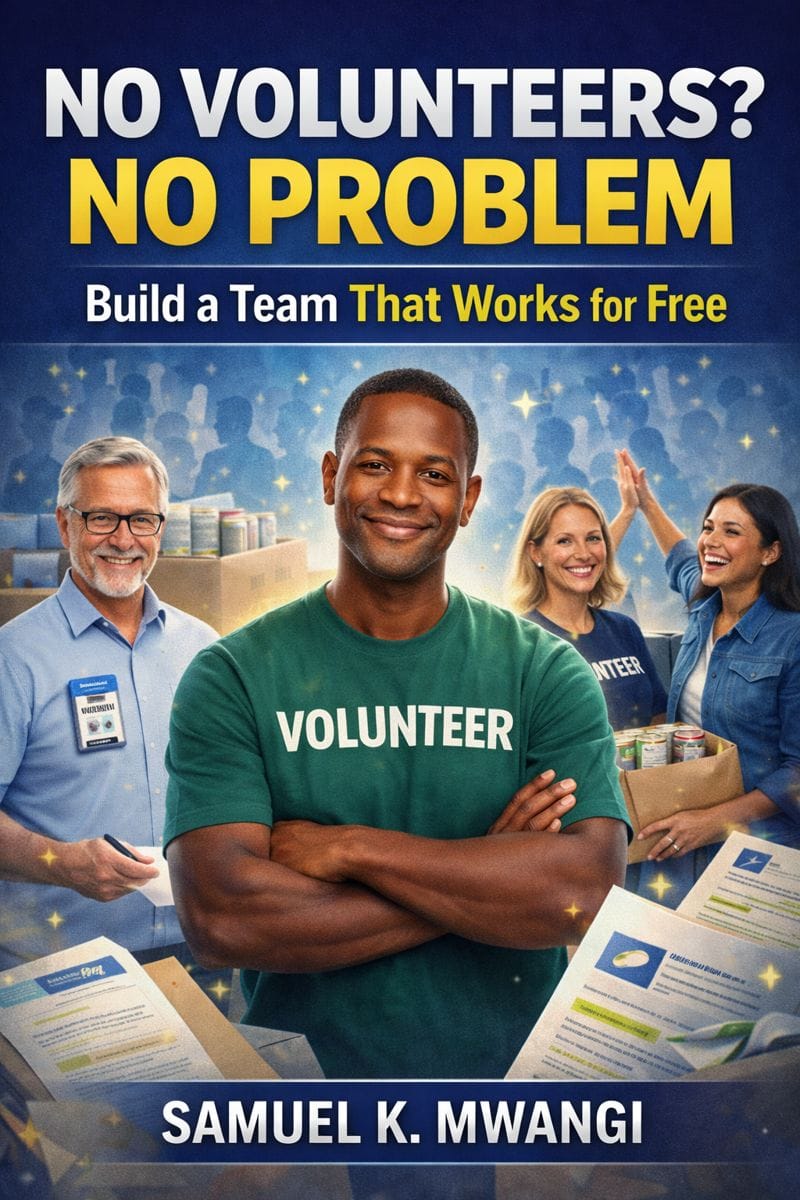
No Volunteers No Problem
Understand how to create clear volunteer roles, improve your recruitment message, and build a volunteer program people want to stay part of.
Volunteering should never become exploitation.
GDIA does not support using people, coercing volunteers, manipulating them into staying, or treating unpaid work as a substitute for basic dignity and fairness. We do not condone slavery, dark manipulation, pressure tactics, guilt, deception, or any practice that takes advantage of a person’s time, trust, or goodwill.
A healthy volunteer relationship should be based on choice, clarity, respect, fairness, and mutual benefit. Volunteers should understand what they are agreeing to, how much time is expected, who they report to, what support they will receive, and how their contribution helps the mission.
What a healthy volunteer–organization relationship looks like
The strongest volunteer programs are not built on pressure. They are built on trust.
Clear choice
Volunteers should be free to say yes, no, pause, or leave without being shamed or pressured.
Clear expectations
Define responsibilities, time commitment, deadlines, supervision, and what success looks like before work begins.
Mutual respect
Volunteers are partners in the mission, not free labor to be used without care or recognition.
Support and feedback
Give volunteers the tools, information, feedback, and communication they need to contribute well.
Recognition
Acknowledge effort, celebrate contributions, and make people feel that their work matters.
Safe boundaries
Respect time, privacy, wellbeing, and personal limits. Do not normalize overwork just because the role is unpaid.
What nonprofit leaders say
“E-volunteering was a concept we hadn't fully explored until we attended a GDIA workshop. Following their strategy, we recruited remote volunteers from across the continent to manage our social media and graphic design, allowing us to focus our budget directly on community programs.”
Chidimma Okeke — Lead Director, Women in Tech Empowerment, Lagos
“GDIA taught us how to systematically use platforms like LinkedIn to recruit e-volunteers for proposal research and translation. We now have dedicated remote volunteers supporting our work across borders.”
Priya Sharma — Volunteer Manager, South Asian Women's Collective, Kathmandu
Free resources to help you build the system
Use GDIA's free learning resources to strengthen your organization before, during, and after volunteer recruitment.
Free Templates
Practical templates for nonprofits and churches covering planning, reporting, proposals, and organizational systems.
Free Books
Simple guides designed to help nonprofit leaders strengthen fundraising, planning, and resource mobilization.
Practical Blogs
Read step-by-step articles on grants, donor readiness, volunteer mobilization, and nonprofit management.
A volunteer program should benefit both sides.
Organizations get skills, time, and support. Volunteers should get meaningful work, clear expectations, respectful communication, and recognition for their contribution. That balance is what makes volunteer relationships sustainable.
For a global reference on volunteerism and online volunteering, explore United Nations Volunteers (UNV).
Volunteer mobilization is part of resource mobilization.
A strong nonprofit learns to mobilize more than cash. It learns to bring together funding, skills, partnerships, knowledge, networks, and people around its mission.
Funding
Grants and other financial resources help pay for programs and operations.
People
Volunteers and e-volunteers contribute time, skills, networks, and professional expertise.
Knowledge
Training, templates, books, and shared experience help organizations make better decisions.
Want more funding and resource-mobilization opportunities?
Join GDIA Grant News for curated funding opportunities, practical nonprofit resources, and updates on upcoming learning opportunities.
Get Free Grant NewsGrassroots Digital Impact CBO • Registration No. DSD/22/115/02/192551